Palm Beach grants initial approval to lagoon anchoring rules as boaters share concerns

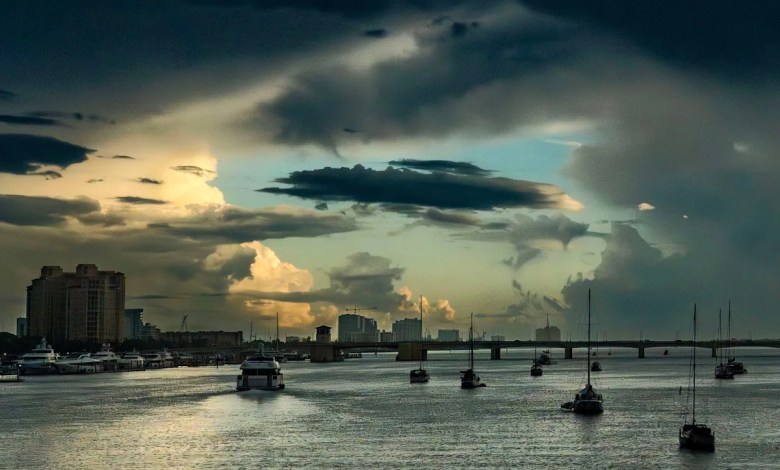
The City Council has granted initial approval to stricter rules for vessels that anchor or dock in the Lake Worth Lagoon.
Under the proposed rules, most boats will no longer be able to anchor for months or years in the part of the lagoon that falls under Palm Beach’s jurisdiction. The city will continue to enforce long-standing rules requiring permits for docking.
The vote at the Oct. 14 council meeting was 4 to 1. Council member Ted Cooney voted no. A second and final vote will take place on November 12.
But the ordinance has been pushed back by some boaters and the Palm Beach Sailing Club, which is in West Palm Beach, across the lagoon from Palm Beach.
The city’s actions were made possible by HB 481, a law passed by the Legislature earlier this year and signed by Gov. Ron DeSantis in May. It removed state rules that prevented local governments from establishing their own anchor rules.
Local governments in counties with 1.5 million or more residents – Miami-Dade, Broward, Palm Beach and Hillsborough counties – are now able to more closely regulate vessels in bodies of water within their jurisdiction.
“This particular ordinance or bill that was passed is the first time in my lifetime that we have had a tool to control, to some extent, what people are doing in our waterway,” said Council President Bobbie Lindsay.
Lake Worth Lagoon, between Palm Beach and West Palm Beach, is part of the larger Intracoastal Waterway.
With next month’s vote, the council would set rules set in stone stating that no vessel can anchor overnight for more than 30 days in a consecutive six-month period in waters under Palm Beach’s jurisdiction. This would not apply to a number of vessels such as rowboats, kayaks, boats that are not more than 22 feet in length and do not have accommodations, nor would it apply to barges, vessels engaged in marine construction work, and boats moored at an authorized mooring field, marina, or private dock.
The city also enforces long-standing laws that govern the placement of moorings, which connect a locator buoy on the water’s surface to a chain embedded in a device permanently installed in the lake bottom. Mooring lines are generally used to provide a more stable return point for the vessel, instead of having to drop anchor. Florida requires mooring permits. Only one of the moorings currently in the lagoon is permitted, city staff said.
This application is part of the management plan for Palm Beach’s Lake Worth Lagoon, announced by police on August 19. The city said the plan is designed to protect and restore seagrass beds and the goal of the new ordinance is to improve the health of the waterway while protecting the health, safety and welfare of Palm Beach residents.
Boats docked in the Lake Worth Lagoon, between the town of Palm Beach and West Palm Beach, on a rainy Wednesday morning, June 25, 2025.
City police and firefighters began removing illegal moorings Aug. 26, sparking concern among boaters who have long kept their boats in the lagoon south of Peanut Island and Palm Beach Harbor.
Some who pleaded with the council at the Oct. 14 meeting said they paid to have moorings professionally installed and have kept their boats in the lagoon for years.
Cary St. Onge of Manalapan said he keeps his 80-foot sailboat on “a very large mooring that I rent from a very reputable company.”
“I learned that mooring is illegal, as are all but one mooring in the lake,” he said. “If I sail my boat and the City of Palm Beach decides to cut off the mooring ball, I will not have a mooring to return to. I will be forced to anchor. After 30 days, I will be anchored illegally.”
Anchorage is less safe for the environment and for boats, St-Onge told council. There is no available dock space nearby, he said, a concern echoed by others who spoke to the council.
After the September council meeting in which city officials discussed proposed rules for anchoring and strengthening mooring in the lagoon, Palm Beach Sailing Club leaders considered the potential effect of Palm Beach’s actions on club members, said member Elie Edmondson. The organization could lose between 40 and 45 members, which he called an “extinction-level event for the club.”
“We survived the Great Recession of 2008. We survived COVID,” Edmondson said. “It would probably destroy the club.”
Council members said mooring enforcement measures and new anchoring rules are not aimed at responsible boaters. The council is “caught between a rock and a sharp edge,” said council member Julie Araskog.

Boats appear to be moored in the Lake Worth Lagoon, or Intracoastal Waterway, between the Royal Park and Flagler Memorial bridges, between Palm Beach and West Palm Beach, on August 22.
“Obviously I want families to be happy, and obviously I want children here, but there was a problem,” she said. “There was a problem with pumping and there was a problem with abandoned boats.”
The problem, however, would lie in what’s called “selective enforcement,” meaning applying the rules only to some people and not all, said Council Member Bridget Moran. “It’s all or nothing,” she said.
The cost of removing abandoned vessels is high, and there is a complex legal and bureaucratic process the city must navigate to have a boat removed, Palm Beach Police Lt. Paul Alber said. Thanks to a $250,000 donation from the Palm Beach Police & Fire Foundation that was approved by the council Oct. 14, the city will be able to move a little faster to remove these boats, he said.
Still, there are state rules that will need to be followed, and that process will take time, he said.
The Palm Beach Police Department’s marine unit is working to educate boaters in the lagoon about mooring rules and the upcoming implementation of anchoring rules, said department spokesman Sgt. Michael Ogrodnick told the Palm Beach Daily News on October 16.
People have generally been receptive to the information and officers are “exercising grace” when necessary, he said.
Ogrodnick gave the example of a boater who was ready to go to the Bahamas, but had to postpone his departure because of the weather. This boater requested and was allowed to stay, he said.
“We’re not going to punish people or harass them,” Ogrodnick said. “We’re trying to be kind and raise awareness.”
Overall, he said, people are frustrated because they didn’t realize the moorings were illegal.
This echoes some comments boaters provided to the council earlier in the week.
The new ordinance excludes people who are able to obtain a permit to moor in the lagoon, said Wellington resident Ed Singer, who told council he is currently working through that permitting process. For decades, authorities turned a blind eye when it came to unauthorized docking, he said.
“And now you’re trying to pursue something that you know people are trying to get legal permits for, which are very difficult to get, and if someone manages to get one … it’s a challenge,” he said, noting that someone applying for a mooring permit has to go through multiple state and federal agencies.
Council President Pro-Tem Lew Crampton implored boaters to see the issue from Palm Beach’s perspective: The city recently clashed with Riviera Beach over that city’s proposed mooring field that would have been under Palm Beach’s legal jurisdiction.
As the council and city fought that proposal, which appears dead, they heard “all kinds of horror stories about how bad these more or less unregulated docking fields really are,” Crampton said. “So I think we have to have a responsibility to our residents. We have a responsibility to protect them.”
Kristina Webb is a reporter for the Palm Beach Daily News, part of the USA TODAY Florida network. You can reach her at kwebb@pbdailynews.com. Subscribe today to support our journalism.
This article originally appeared on Palm Beach Daily News: Palm Beach Gives Initial OK to Lake Worth Lagoon Anchoring Rules.