
Warning: don’t look in the Deadlights. This article contains spoilers for episode 3 of “It: Welcome to Derry”.
Through three episodes of “It: Welcome to Derry,” the HBO series somehow took one of the most uninspired ideas (hey, what if we made a prequel to the “It” movies?) and made it better than it has any right to be. Contrary to popular belief, it actually helps that the writing team did not have the benefit of a singular Stephen King text to draw upon. Instead, by drawing inspiration from several of King’s novels and aspects of the original “It” book that weren’t included in Andy Muschietti’s blockbusters, the series benefits from almost endless possibilities for where this story might go next.
This display of creative freedom was a huge boon at first, but fans may have started to notice a recurring element carried over from both “It” films that continues to bring this prequel back down to earth. For all the box office success of the big screen adaptations, perhaps the most common criticism leveled against them was their over-reliance on questionable visual effects work during some of the biggest scares. “Chapter Two” was perhaps the biggest offender in this regard, frequently concluding many horror-focused setpieces with unconvincing digital recreations of Pennywise (Bill Skarsgård) in his many frightening forms.
“Welcome to Derry” builds on the book of its predecessors, but with far less effective results. The first and second episodes returned to this several times, leading to images like the mutant baby, the monster giving birth, and that severed head in the pickle jar. But Episode 3 could very well be the low point so far, repeating the one major mistake of the “It” films.
Overuse of visual effects continues to undermine the best scares: Welcome to Derry
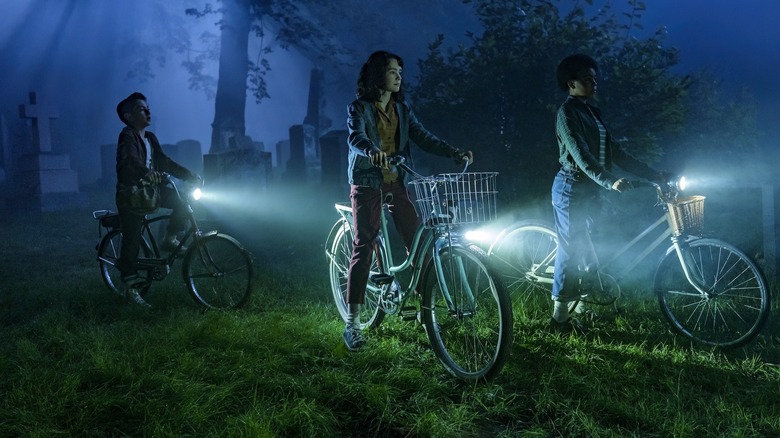
A stubborn pattern has become a trend and is now at risk of turning into a bad habit through the first three episodes of “It: Welcome to Derry”. When the first hour began with one of the most gruesome sequences in the entire franchise, it was easy to look past the somewhat uncertain computer generated work to bring this flying baby demon to life. As much as we like to talk about the superiority of practical effects, it’s fair to recognize that it wasn’t such an obvious decision for a claustrophobic action scene taking place within the confines of a single car. There was a little less excuse when it came to that episode-ending massacre in the movie theater, or that traumatic nightmare experienced by Ronnie Grogan (Amanda Christine) that ends with a cartoonish monster trying to swallow him up. By the time Episode 3 builds to this gnarly graveyard setting, only to be undone by VFX renderings straight out of a “Ghostbusters” movie, it becomes impossible to ignore.
While it’s easy to lay all the blame on Andy Muschietti, returning from his directing work on the films as series developer (along with Barbara Muschietti and Jason Fuchs), this feels like a failure of imagination from top to bottom. What makes this so frustrating is that the design and staging of each alert was exceptional. That aforementioned graveyard scene, where our new Losers Club attempts to summon Pennywise, escalates with a sense of tension that rivals many horror films. The atmosphere, lighting, and mounting fear should have made this a highlight of the show…until it was all undermined by Casper, the ghost, and his muddy-looking friends.
It: Welcome to Derry needs to get back to the basics of horror
However, this doesn’t have to be the nail in the coffin of “It: Welcome to Derry.” The creative team has already proven capable of putting a smart and imaginative spin on the property’s typical action depiction. The characters experience their greatest fears, Pennywise exploits those who have hallucinations like a Rube Goldberg machine from hell, and only a few last-minute heroics save them from certain death. Although this formula threatens to seem outdated and overdone, the show’s unequivocal strengths point to a path forward for the rest of the season.
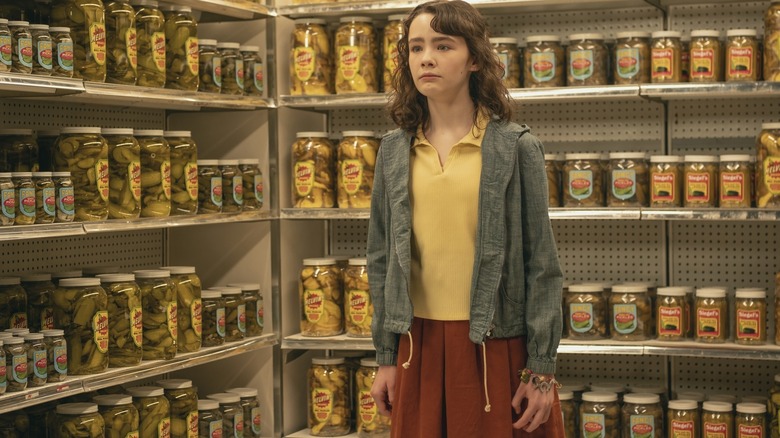
Look no further than some of the best and most emotionally engaging sequences in the series so far: the creepy and horribly dark lamp scene, that scare at the grocery store (until the disembodied corpse of Lilly’s late father appears), and the vision Dick Hallorann experienced of Chris Chalk while he was in that helicopter. All three find unique ways to manifest Pennywise as a cosmic executioner who knows exactly how to twist the knife for our protagonists, while deploying some of the most classic horror tropes that stand the test of time. The first uses our knowledge of history against us, the second preys on everyone’s childhood fear of getting lost in a labyrinthine maze, and the third is actually a fantastic use of visual effects and spectacle – culminating in that haunting (and familiar) visual of all of Pennywise’s “floating” victims in the sewers.
The HBO series has shown that it can live up to and even surpass the heights of the “It” films; now he has to do it consistently. By taking a more back-to-basics approach, we will all float too. New episodes of “It: Welcome to Derry” air on HBO and HBO Max every Sunday.


