Triple polar vortex drops temperatures in central and eastern US as first Arctic cold blast arrives

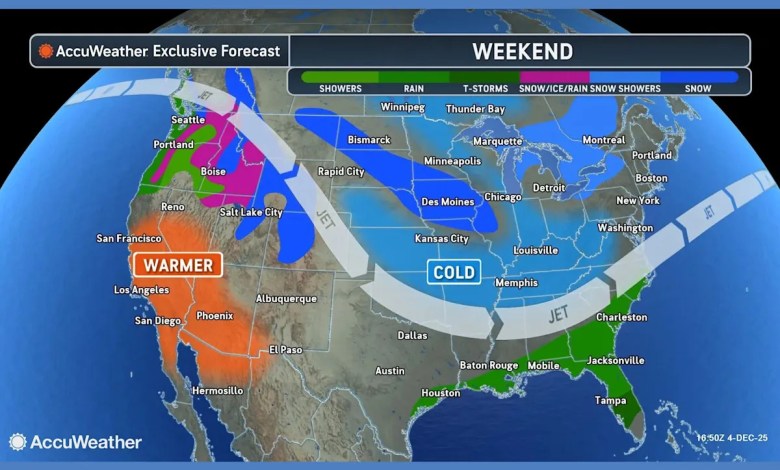
The first of three cycles of cold Arctic air from a shifting polar vortex sent temperatures plummeting across the central and eastern United States, threatening centuries-old record lows in cities and towns from Iowa to Maine.
And meteorologists are predicting two more bouts of freezing temperatures for millions of people over the next two weeks.
“The week will end with the coldest air of the season so far, as a front advances from the Midwest into the Northeast and Mid-Atlantic,” said AccuWeather Senior Meteorologist Renee Duff.
“A shift in the polar vortex allows Arctic air to infiltrate the central and eastern United States,” Duff said. “A second cold snap is expected next week, and a third spell of frigid air is likely mid-month.”
When will Arctic air arrive? And how cold will it be?
Extremely cold temperatures hit parts of the Midwest and Northeast on Friday, where record lows were recorded, including zero degrees in Springfield, Illinois; 3 degrees in Kalamazoo, Michigan; minus 4 degrees in Plattsburgh, NY; and 6 degrees in Scranton, Pennsylvania.
In Iowa, more than a dozen cities set new records Thursday. In Waterloo, it was minus 15 degrees, breaking the record of minus 7 degrees set in 1991.
Other record temperatures could be broken in the coming days. “Overnight lows below zero are likely in parts of the Dakotas and Minnesota, especially Sunday morning, as a result of the upcoming Arctic front,” according to the National Weather Service.
A woman jogging in Colorado Springs, Colorado, on December 3. (Christian Murdock/The Gazette via AP)
For the next few days, here are the general maximum temperature forecasts from the NWS:
-
Central and southern plains east to mid-Atlantic: 1930s and 1940s
-
Texas and the Southeast: 1940s and 1950s
What other weather impacts are expected?
“Snow will once again bring the holiday mood this weekend for an estimated 60 million people from the Plains to the Midwest, accumulating several inches and making travel slippery,” AccuWeather meteorologists say.
“A band of accumulating snow, ranging from 1 to 3 inches, will extend from Montana to Iowa during the day Saturday, then farther east across portions of the Great Lakes and Ohio Valley Saturday evening into Sunday,” according to AccuWeather.
What is a polar vortex?
Let’s start with the “polar” part. A large area of low pressure and cold air still surrounds Earth’s north and south poles. “Vortex” refers to the counterclockwise direction of air that keeps cooler air near the two poles. During winter in the Northern Hemisphere, it is common for the polar vortex to expand, pushing cold air from the North Pole south along the jet stream, according to the NWS.
Staying safe during a power outage
AccuWeather advises people to finish winterizing their home and water lines, have their furnace checked and order heating oil or propane as soon as possible.
Here are some recommendations from the American Red Cross in the event of a power outage and your primary heat source:
-
Only use generators, grills, and camp stoves placed outdoors and away from windows to avoid carbon monoxide poisoning.
-
Never use an oven or stove to heat your home, as this could lead to carbon monoxide poisoning and fires.
-
Use battery-powered lanterns or flashlights instead of candles due to the risk of fire.
-
Close any parts you don’t need.
-
Use caution when using fireplaces and heaters. Keep anything that could catch fire at least 3 feet from the heat source.
Stay safe if you have to go out
The American Red Cross advises that if you must go outside, keep as much skin covered as possible to avoid frostbite. Wear layers of loose, warm clothing and a hat; mittens that fit snugly around the wrist are better than gloves. Wear a ski mask or scarf to cover your face and, if possible, water-resistant boots to keep your feet dry.
Avoid overexertion that often occurs when walking in deep snow, as this could cause a heart attack or other serious health problems.


