
A new kind of gold rush is sweeping the West, and this time, the issue is not minerals but megawatts. From Phoenix to Colorado’s Front Range, data centers are arriving with outsized demands for electricity and water. In a new report, regional environmental advocacy group Western Resource Advocates (WRA) warns that without stronger safeguards, the financial and environmental costs could fall on ordinary households.
In Arizona, Colorado, Nevada, New Mexico and Utah, new data centers are expected to lead to increased resource usage, increasing consumers’ electricity bills while putting climate goals at risk. By 2035, the increase in new data centers could increase the interior west’s electricity demand by about 55%, the WRA warns.
The unprecedented scale of industry’s energy needs threatens to derail decarburization objectives in several states. Energy experts say astronomical energy needs could allow fossil fuels like coal and gas to be used for longer. NV Energy, Nevada’s largest utility, now expects its carbon emissions to increase 53% over 2022 estimates due to the growth of new data centers.
Deborah Kapiloff, clean energy policy advisor to the WRA and author of the new report, highlights the incredible scale of additional energy needed for the region’s tech infrastructure boom. According to his calculations, over the next decade, Western data centers will consume enough electricity each year to power 25 cities the size of Las Vegas.
Who covers data center electricity costs?
In some cases, industry externalizes these energy costs to the public. Kapiloff explains that consumers are likely to shoulder the burden of expensive new electricity infrastructure because utilities typically spread construction costs among all users. With the unprecedented demand for power-hungry data centers, this logic is breaking down. “When the customer is this important, the old assumption that ‘growth helps everyone’ no longer holds,” she said.
In Colorado, regulators are struggling to keep up. John Gavan, a former member of the Colorado Public Utilities Commission, says his state’s utilities may need to roughly double their total electricity production within five years to keep up. “The scale here is mind-boggling,” he said. “A single hyperscale data center could consume 10% or more of the state’s total load. »
Officials say current pricing rules could drive up electricity costs from new data centers to residential customers. Joseph Pereira, deputy director of the Colorado Utilities Consumer Advocacy Bureau, says that could mean rate increases of 30 to 50 percent for households — and those costs could double or even triple in the long run.
Pereira also highlights the risks of building new power generation and transmission facilities for data centers that may never be built. “If we build the infrastructure and the data center charges don’t show up, someone ends up carrying the responsibility (for the costs),” he says. “Today, it’s existing customers.”
Water on the line
Data centers also lead to high water demands. Near Tucson, Arizona, a data center project in the Sonoran Desert in Pima County has become a community hot spot due to the project’s high demands in a region already facing water stress. Initial designs suggest the controversial Project Blue will require “millions and millions of gallons,” said Pima County Supervisor Jennifer Allen, although official numbers have not been released.
“Getting people out of their water is a bright line that, even in this divided country, people agree on,” said Allegra Jordan, a professor at Duke University. As a community advocate for data center projects, she has repeatedly seen local authorities asked to approve developments without key information about their impacts.
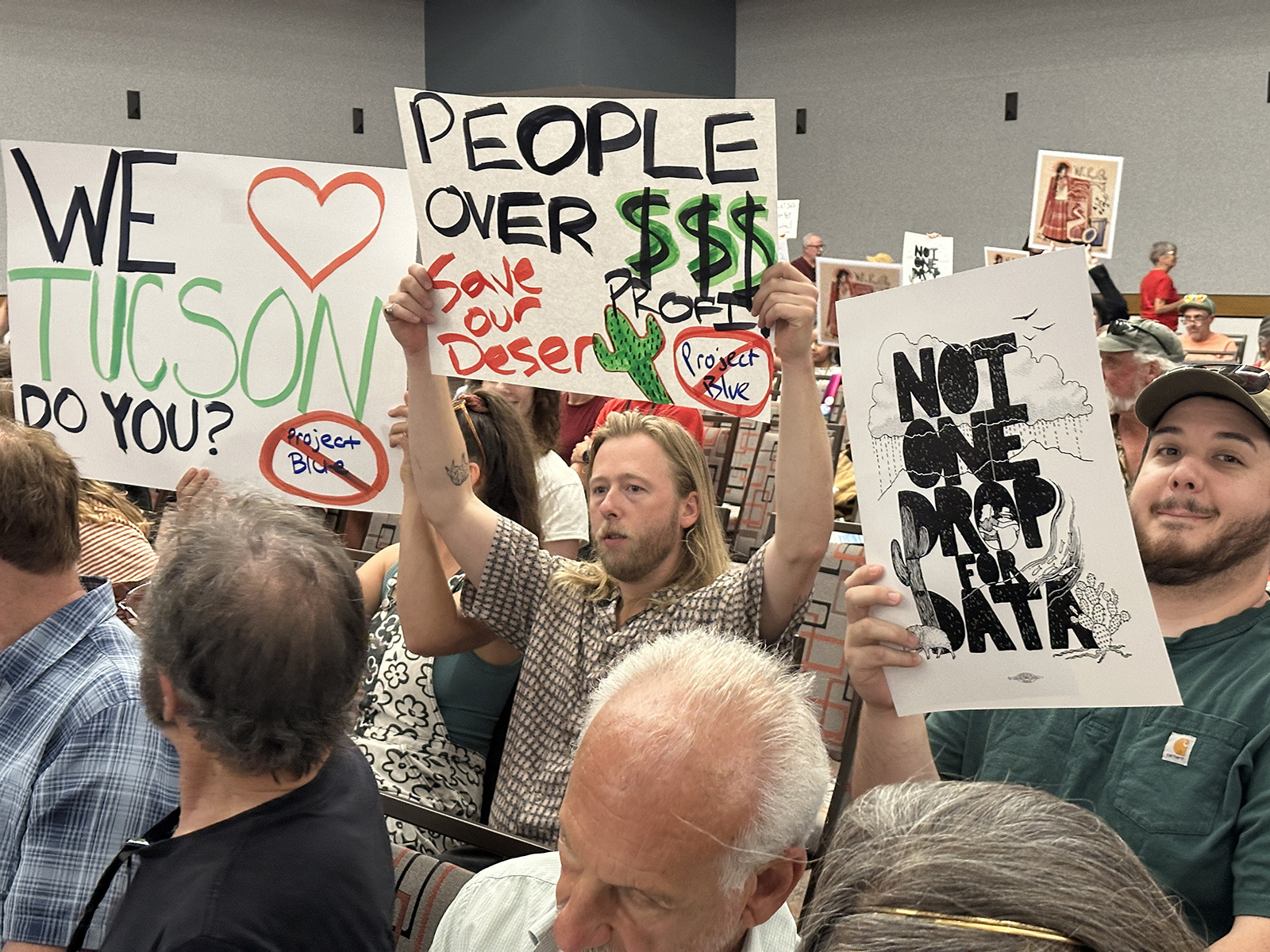
In Arizona, community backlash against Project Blue forced a redesign, and the developer now claims the new plans will use little or no water, although Allen says she has seen no documentation to support that claim. Kapiloff notes that transparency around water use is a common problem. “We lack information on the total amount of water used by data centers: it’s a big black box,” she says.
When it is possible to estimate the amount of water potentially needed for new data centers, the scale is sobering. In Nevada, for example, new data centers currently proposed will consume about 4.5 billion gallons of water in 2030, if built with a conventional cooling system. This figure will rise to 7 billion gallons by 2035, the equivalent of water for nearly 200,000 people.
Accelerated agreements, secret facts
Yet the speed and secrecy of data center development deals often leaves even managers in the dark. During the first phase of Project Blue in Arizona, Pima County Supervisor Jennifer Allen said she and the rest of the Board of Supervisors were asked to vote on the proposal without having access to all the information about the project, due to NDAs signed by county staff and extended to elected officials. “The game was shrouded in secrecy,” she says.
Jordan believes that communities deserve informed consent on the impacts that data centers will have on their electricity bills, water consumption and environmental impacts. “The moral question is whether or not people should have consent about whether or not their electricity bills go up, or how their water is used,” she says.
She also points out that, lured by promised tax gains, local government entities sometimes do not fully disclose what is being offered in incentives and exemptions for data centers. “Often data center proponents say it will lead to new property taxes and new jobs,” she says. “But many communities don’t actually understand what they’re giving up. And even though the community government is the entity that receives that money, the people who pay, in terms of higher electric bills, are ordinary citizens.”
Building better: a guide to responsible development
In response to these growing pressures, some communities are taking protective measures. After the Project Blue debacle, for example, the Pima County Board of Supervisors implemented new regulatory requirements, including NDA limits and a “daylight period,” during which findings must be made public before votes. Other potential interventions recommended by the WRA include energy efficiency requirements, ending tax incentives for data center development, and prioritizing data center projects that engage in renewable energy production.
Consumer advocates like Pereira are also working to ensure that large customers pay their own way, helping to protect existing customers if the proposed data centers are never built. The WRA report highlights key tools such as specialized rate classes designed to ensure that large or unusual customers pay rates that reflect their unique impact, and requirements that data centers pay for their projected energy needs, even if demand declines or never materializes. Clean transition tariffs, or special electricity rates that help large energy consumers switch to cleaner energy, could help finance renewable energy projects to power data centers. Finally, creating standards that keep loadings at off-peak times can help protect both taxpayers and resources.
Energy efficiency best practices and “behind the meter” approaches can also help. In Europe, innovative models include a group of data centers under construction in Finland that will use the heat generated to heat around 100,000 homes in Helsinki, as well as a data center in Norway that provides heated water to support nearby aquaculture. These techniques can also work in the United States: a new development in San Jose, California, is seeking to become one of the world’s most sustainable data centers, integrating on-site energy sources and using waste heat to power equipment coolers.
While tools like these can help, without rapid reforms, even the best planning policies won’t be able to prevent the impacts of rapid data center growth. Many communities face aggressive data center prospectors and still lack enforceable guardrails and transparent rules that protect taxpayers from costs and protect the environment.
As Kapiloff says: “When some of the most capitalized companies in the world are building these data centers, does it make sense that that cost would be borne by ordinary people? I think the answer to that question is a resounding no.”
Western Resource Advocates is a regional nonprofit organization that fights climate change and its impacts to support the environment, economy and people of the West. The organization leads the state to advance policies that create a healthier, more equitable future for all communities. As the go-to expert for more than three decades, WRA’s field work deploys clean energy and protects air, land, water and wildlife.


