
Air travelers have had a wild ride this fall with flight cancellations and staffing shortages tied to the U.S. government shutdown, plus the annual Thanksgiving rush still to come.
Here’s what we know about air travel during the busy holiday season, when millions of Americans will be heading to airports across the country.
The longest shutdown in U.S. history ended Wednesday evening when President Trump signed a bill to reopen the government.
Travel experts and analysts said it could take a week or more for airlines to recover from the recent disruptions.
During the shutdown, some air traffic controllers who were not paid did not show up for work. The staffing shortage triggered an emergency order from the Federal Aviation Administration to gradually reduce flights.
FAA-mandated flight reductions at 40 major airports will be frozen at 6%, the Transportation Department said Wednesday evening, falling short of the planned 10% because more air traffic controllers now report to work.
They will remain at this level until the FAA determines it is safe to resume more flights.
“The FAA safety team is encouraged by the increase in our air traffic control workforce, and they feel comfortable with the idea of pausing the reduction schedule to give us time to review the airspace,” Transportation Secretary Sean Duffy said in a statement.
“If the FAA safety team determines that the trend lines are moving in the right direction, we will provide a path to resume normal operations.”
Duffy said Tuesday he expects the flight issues to be resolved before Thanksgiving travel begins.
Airlines for America, a trade group representing major U.S. airlines, said in a statement Wednesday that the government’s reopening would allow airlines to resume operations before Thanksgiving.
But it will take time.
“Airlines can’t flip a button and resume normal operations immediately after a vote – there will be residual effects for days,” the group’s president and CEO, Chris Sununu, said in an earlier statement.
Delta Air Lines said in a statement Wednesday that it expects to be “back to full capacity over the next few days.”
Katy Nastro, travel expert at Going.com, said recent high levels of disruption are unlikely to extend into the holiday week if the government reopens quickly. That said, the understaffing of air traffic controllers that prompted the FAA to order flight reductions will likely be a factor even after schedules are reinstated.
“If we’re still short a certain number of controllers … we could see some disruptions during Thanksgiving, but probably not to that extent,” Nastro said.
A long-standing shortage of air traffic controllers has worsened with the shutdown. DOT Secretary Duffy said that before the shutdown, an average of four controllers retired each day. That figure recently increased to 15 to 20 per day, meaning “this is going to persist in air travel well beyond this government’s reopening period,” Duffy told CNN on Sunday.
Passengers arriving in TSA lines at some airports, in Houston and Atlanta, for example, have intermittently experienced long wait times for security checks due to staffing issues.
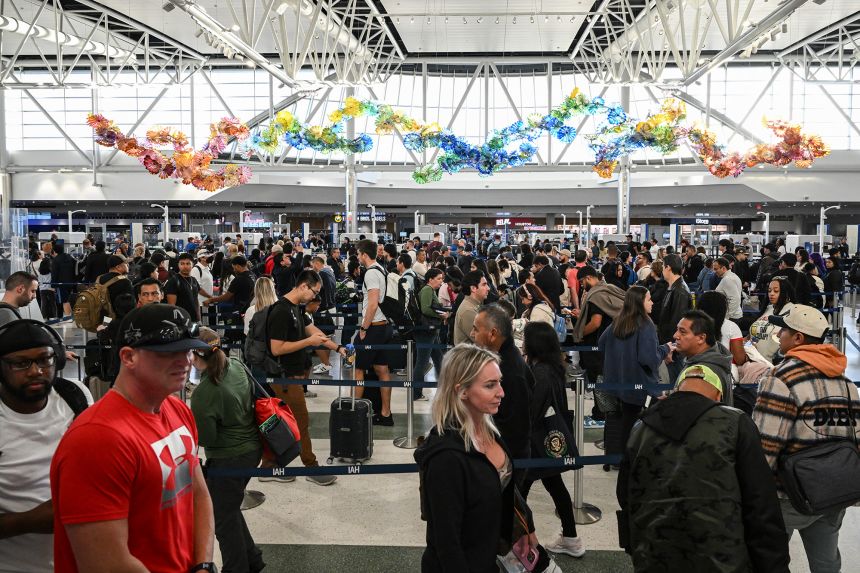
Whatever happens in the coming days, travelers should head to the airport for Thanksgiving travel prepared with as many resources as possible for a quick pivot.
Before your travel day, download your airline’s app and enable push notifications about flight changes. Third-party apps like FlightAware, Flighty, and TripIt can also be helpful.
And look for flight alternatives, in case your original trip is disrupted. Travel site Hopper suggests booking with its Disruption Assistance service, which offers rebooking on any airline. Several other booking platforms and airlines offer similar services.
Arrive at the airport early – at least two hours before domestic flights, but perhaps even earlier during the busy holiday season.
The first flight of the day is a great option, according to Hayley Berg, senior economist at Hopper. “In general, flights departing after 9 a.m. are 2 times more likely to be delayed than departures scheduled between 5 a.m. and 8 a.m.,” Berg said in an email.
Right now, flights are generally not full, so catching another flight shouldn’t be a problem, said John DiScala, founder of travel site JohnnyJet.com.
“But if it’s during the holidays, the flights are full and you won’t be able to board. [another] flight as simple as that. So you might be stuck. Time is running out – we must hurry.
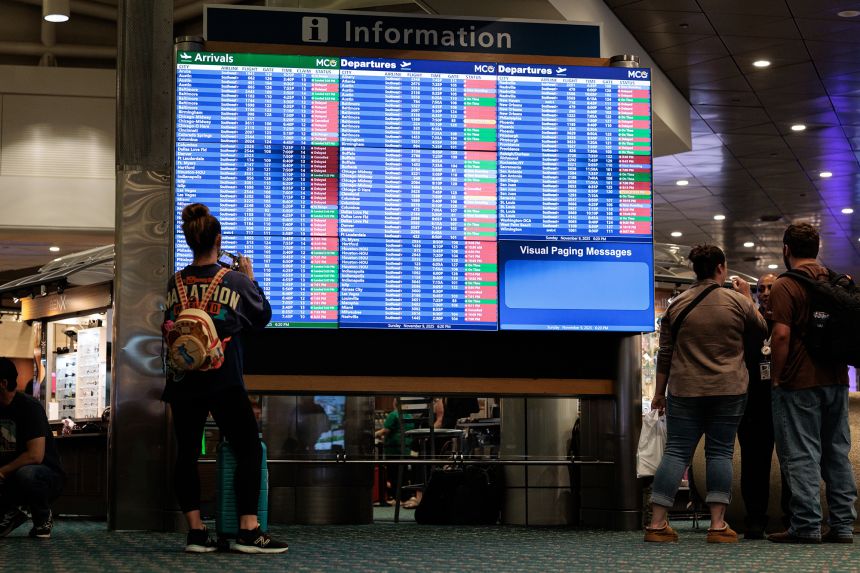
Stay up to date with your flight status, contact the airline immediately – via the airline’s app chat feature, while simultaneously calling the airline and queuing for customer service if you’re at the airport. Give yourself as many options as possible to resolve your situation quickly. “And always be kind,” DiScala added.
Find out more tips on what to do if your flight is delayed or canceled here.
For travel this week, most U.S. air travelers were able to change their tickets — even basic economy — for free thanks to airline waivers for short-term flights affected by the shutdown. Bad weather or staffing issues could trigger waivers during the holiday period, DiScala says. Keep an eye on the weather, which is always an unpredictable factor during the holiday season.
DiScala urges travelers making new ticket purchases to avoid basic economy fares in case future waivers exclude the cheapest tickets.
Use waivers to your advantage, advises DiScala. This is a free opportunity to change your plans, whether you’re skipping your trip, extending your stay, or looking for a better route.
Developing a solid plan B is worth it if it’s essential that you get to your destination quickly.
That might mean buying a backup ticket at least a few hours later than your original flight on another airline, DiScala said, “but that’s only if you absolutely need to be somewhere or are really worried about it.”
The easiest way to do this is to use frequent flyer points or miles, as you can easily redeposit them if you cancel the backup flight. If you need to buy a second ticket, be sure to avoid basic economy so you can cancel for a travel credit that’s usually good for a year.
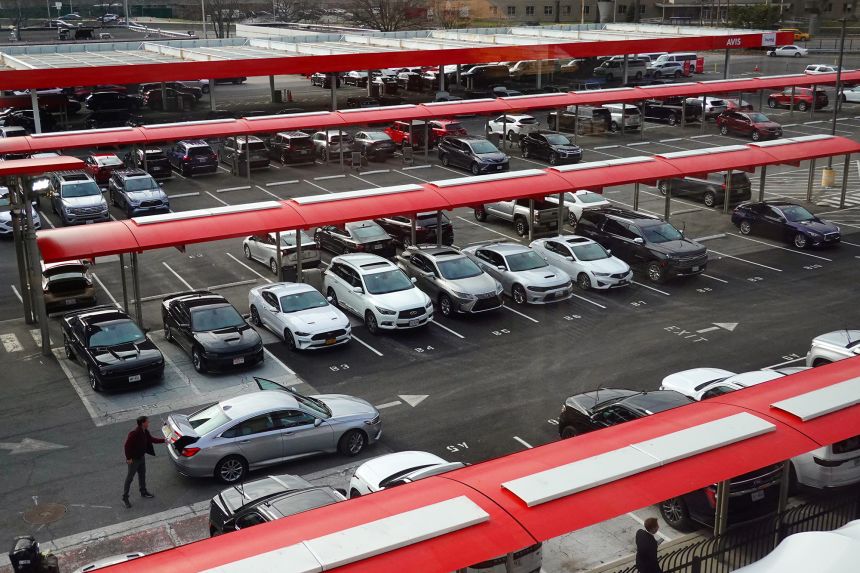
Making a car rental reservation can be a good idea in the event of a disruption. Major car rental players Hertz and Avis have reported an increase in one-way rental bookings amid the first waves of recent flight cancellations, so jump on this option quickly. Hertz reported a 20% year-over-year increase in one-way bookings over the weekend, noting that many flight cancellations were on shorter regional routes.
If you’re traveling on a regional route, less than about 500 miles, during a period marked by disruptions, “you may want to consider driving because regional jets are the first to be canceled,” DiScala said.
Although this does not reassure passengers on canceled flights, these regional cancellations generally affect fewer passengers, noted aviation consultant Mike Boyd. His advice last week, when flights were reduced, was to “take a break” and “relax”.
Boyd emphasized that the reductions ordered by the FAA applied “to flights, not seats, not passengers. Flights,” and noted that American Airlines’ flight reductions to Texas destinations such as Waco and Killeen likely affected a total of about 50 people per flight.
Many travel insurance policies apply to “unforeseen events,” according to Chrissy Valdez, senior director of operations at travel insurance comparison site Squaremouth. But once an event like a shutdown becomes known, it often isn’t covered. Check the fine print of your policy with your insurer.
Cancellation for any reason and Interruption for any reason coverages provide the highest level of protection for travelers purchasing insurance, she said.
The uncertainty of waiting to see how Thanksgiving might turn out isn’t for everyone. Some Americans have preemptively opted for Plan B to protect themselves from stress.
Alexis Miller-Weissman, who lives in Seattle, purchased Amtrak tickets last week as a contingency plan for the trip she is taking with her husband and stepson to visit her parents and other relatives in northern Nevada for Thanksgiving.
That was before a deal began to take shape in Congress on Sunday. But after this news broke, they decided to continue the train trip from Seattle instead of braving the weeklong holiday at SeaTac Airport. She received a credit for their Alaska Airlines tickets, Miller-Weissman wrote in a message to CNN.
The train journey takes “more than 29 hours of travel…but it’s picturesque and quiet.”
CNN’s Chris Boyette, Amanda Musa, Alaa Elassar and Chris Isidore contributed to this report.


