
The New Hollywood movement of the late 1960s and 1970s gave talented young writers and directors unexpected variations on the medium’s most tried-and-true genres. Almost every week brought something new and confusing to movie theaters across the country (provided you lived in a big city). As this cultural revolution raged throughout the tumultuous 1970s, the old guard of movie stars found themselves replaced by Warren Beatty, Faye Dunaway, Jack Nicholson, Meryl Streep and the late Robert Redford.
Jeff Bridges was an actor who seemed destined for major movie stardom; he possessed high-powered sex appeal as Duane in Peter Bogdanovich’s “The Last Picture Show,” but the co-captain of his bad high school football team is a deeply vulnerable young man with questionable prospects. There’s something off about Duane, and that uncanny quality would apply to enliven most of Bridges’ best performances.
Fresh off “The Last Picture Show,” Bridges gave two of his finest performances in 1972. One was in John Huston’s “Fat City,” where he shined as Ernie Munger, a promising young boxer who, it soon became clear, was not going to make it. The other came in “Bad Company,” the directorial debut of Robert Benton (co-writer of “Bonnie and Clyde” and director of “Kramer vs. Kramer” and “Nobody’s Fool”), where he defied our sympathies as an opportunistic and incompetent young Western outlaw named Jake Rumsey. They’re both raw, well-crafted gems, but “Fat City” is now practically a canonical masterpiece of the new Hollywood. “Bad Company” does not enjoy the same level of respect (although Roger Ebert was an early admirer). Why is a revisionist western still considered a minor work?
Jeff Bridges is a gunslinger misfit in Bad Company
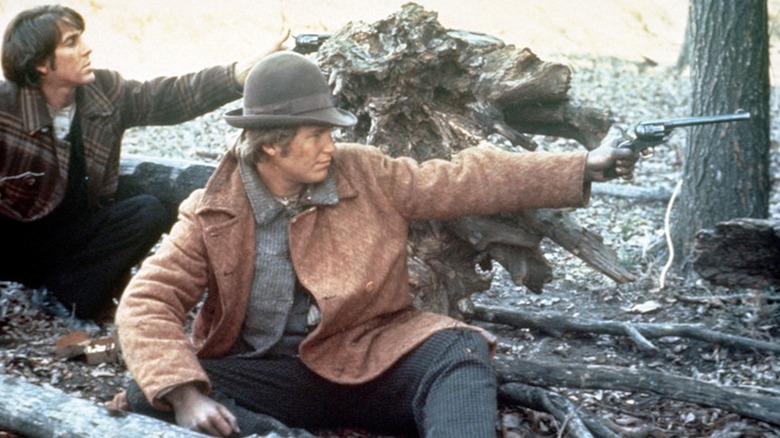
When Robert Benton died five months ago at the age of 92, I struggled to make sense of his career. He toyed with genre conventions early in his career with subversive films like “Bonnie and Clyde,” “Bad Company” and “The Late Show,” but then he was bitten by the prestige bug. “Kramer vs. Kramer,” “Places in the Heart” and “Nobody’s Fool” never seemed explicitly like Oscar bait, but they were at least solidly made films.
I kept coming back to “Bad Company,” expressively filmed by the great Gordon Willis, and dominated by Bridges as the budding outlaw legend who is constantly undermined by his fresh-faced naivete. Jake is not a young man to be feared; he’s a deranged kid you slap behind the ear and tell him there’s a lot of honest work out there for an able-bodied kid like him. Yes, Jake and his nemesis Drew (Barry Brown) survived, but they’re not vicious or calculating enough to last long. At the conclusion of “Bad Company,” that final freeze frame in the Wells Fargo bank feels like the ending of “Butch Cassidy and the Sundance Kid” in reverse. They’ll get the money, but it’s hard to believe there won’t be deputies lined up with shotguns as they try to escape. These boys are dancing at the edge of their graves. Maybe they’ll have a chance or two, but no one will spread their legend because there’s no story to tell. And that’s why it’s so cool that Benton and Newman chose to create this funky outlaw classic.


