
We celebrate the life of the late Rob Reiner, who tragically passed away at age 78.
Stephen King is not only a prolific author, but also the source for dozens of major films and television shows that adapt his work. His name is a recognizable brand, relied upon by studios for some of the most acclaimed and successful horror films of all time. Hell, there’s a reason why 2025 alone has had so many Stephen King adaptations.
Yet as popular as King and his work are, not all adaptations are guaranteed. There’s at least one Stephen King movie that every Hollywood studio rejected, but when finally made, it became a benchmark for coming-of-age tales in the ’80s and a true classic. The film is called “Stand By Me,” adapted from King’s short story “The Body.” It follows four preteen boys, each from a distinctly dysfunctional family, who decide to see a dead body they’d heard about and report it in hopes of becoming famous. Directed by Rob Reiner in 1986, the film remains a beloved and nostalgic film, one that only gets better with each rewatch.
And yet the movie only worked once Rob Reiner made a crucial change. In an oral history for the film’s 30th anniversary at Variety, Reiner struggled with a lack of focus in the script. “It was giving me headaches trying to figure it out,” Reiner said. The turning point, according to producer Andrew Scheinman, was “the realization that the script should focus on Gordie and not Chris. It’s the story of a little kid who doesn’t feel appreciated by his father and then realizes that it’s his father’s problem, not his.”
A simple change that made the film work
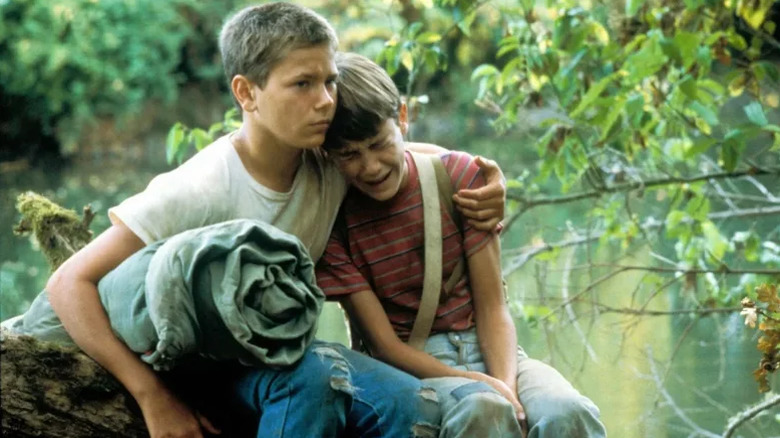
It seems that in the initial version, Gordie was only one of four characters. “He was an observer. He wasn’t the center of attention,” Reiner said. “Then I thought, this is a child who doesn’t have confidence in himself. He is determined to go see this body, because he never cried at his brother’s funeral and his father always paid more attention to his deceased older brother.”
The plot is essentially the same as the book, but much like the source material, Gordie mostly tells what’s going on and focuses on what his friends, especially Chris, are doing rather than himself. It makes sense, because Chris is the cool best friend, the kid you always looked up to and aspired to be as a preteen. Of course, shifting the focus to Gordie wasn’t easy. He is neither the most tragic, nor the most physically distinct, nor the most courageous. It’s easy to push it into the background and be the observer and eventually the narrator. As producer and co-writer Bruce A. Evans said, “We resisted at first, then we saw where he was going. Rob does that sort of thing very well.”
Indeed, it is this change that makes the film what it is. Gordie is the one with the biggest character arc in the film, as it’s more about how he deals with his own feelings regarding how his parents treat him than him actively changing the people around him. Gordie finally opens up to Chris and decides to no longer be just a silent observer, it’s cathartic and emotional. It’s easy to understand why even Stephen King was overcome with emotions after watching the film.


