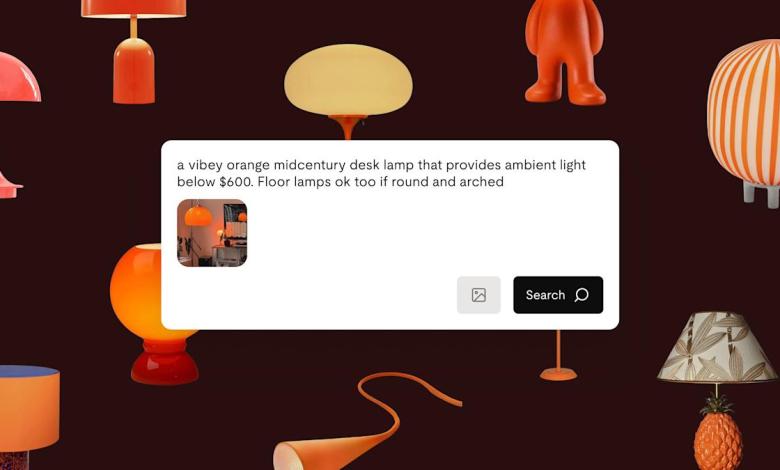
Big tech companies don’t just use AI to help you generate or summarize content, they also want you to use it for shopping. OpenAI, Google and Amazon have invested heavily in AI assistants that research new product categories for you and suggest the right ones to buy.
Startups like Perplexity, Daydream, and Cherry have also built businesses around AI for product discovery. All these efforts have led to customers using AI more to make purchases. Onton (formerly Deft), an AI-powered furniture shopping platform, claims to have seen its user base grow from 50,000 monthly active users to over 2 million monthly active users, serving millions of searches and image generations.
Fueled by this growth, the startup announced today that it has raised $7.5 million in a new funding round led by Footwork, with participation from Liquid 2, Parable Ventures and 43, among others. This funding round brings the startup’s total funding to approximately $10 million.
 Onton co-founders Zach Hudson and Alex GunnarsonImage credits:Onton
With this funding, the company aims to expand into new categories such as clothing and, ultimately, consumer electronics.
The company switched from Deft to Onton earlier this year, citing confusion around the original name and difficulty obtaining a premium domain.
Zach Hudson, co-founder of Onton, says that while large language models (LLMs) are good at guessing likely intent, they haven’t solved many problems in e-commerce. He added that the startup has observed that the average time it takes for a consumer to make a purchasing decision has increased.
Image credits:Onton
For its core technology, the company uses what is called neuro-symbolic architecture. Hudson said that with this approach, the company can eliminate hallucination problems from LLMs and provide better logical research results. He added that the startup’s model can also learn real-world information that isn’t necessarily included in a product’s description.
“Let’s say you’re looking for pet-friendly furniture. Our tools know that if the item contains polyester, it will be more stain and scratch resistant, therefore more pet-friendly. Our tools learn these things with each search and get smarter faster,” Hudson said.
He added that often when you search for a product that may be called differently on different sites, you don’t get great results. The company’s AI model takes these scenarios into consideration when presenting results.
Onton has added different input methods and features to help people with their short- and long-term decisions. You can now upload an image or add a prompt to generate what you want to achieve with your home or office setup, and Onton can find your furniture based on that.