Nicolas Sarkozy will be released from prison under judicial supervision, the court of appeal prohibits him from any contact with Gérald Darmanin


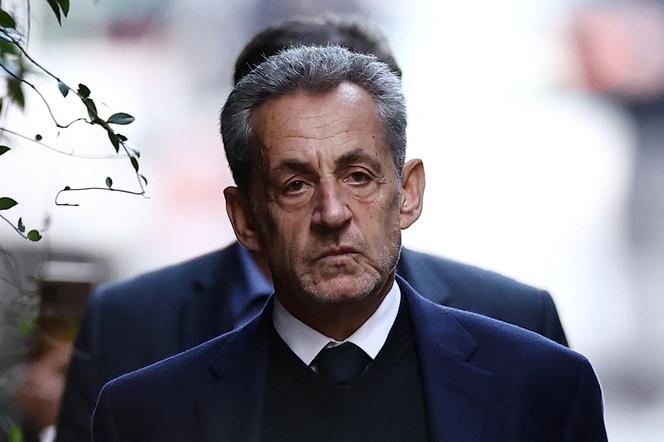
Nicolas Sarkozy will be released from La Santé prison in Paris, after twenty days of pre-trial detention, decided the Paris Court of Appeal on Monday, November 10, which placed him under judicial supervision in accordance with the requisitions of the general prosecutor’s office. Justice also prohibits Nicolas Sarkozy from contacting the Minister of Justice, Gérald Darmanin, who visited him at the end of October. The interview sparked criticism, particularly from magistrates. A ban on contact with all defendants, the office of the Keeper of the Seals and on leaving the territory was also imposed.
During the hearing examining the request for release, Nicolas Sarkozy declared that his detention “is hard. It’s very hard, it certainly is for any inmate, I would even say it’s grueling”adding that he wanted to pay tribute to the prison staff who “was exceptionally humane and made this nightmare, because it is a nightmare, bearable”he continued, his face closed, appearing by videoconference from La Santé prison. He also stated that he did not have “imagined waiting 70 years to experience prison”.
The former President of the Republic was sentenced, on September 25, to five years in prison with a committal warrant accompanied by a provisional execution for criminal conspiracy in the case of Libyan financing of his presidential campaign because the Paris Criminal Court found him guilty of knowingly letting his collaborators approach Muammar Gaddafi’s Libya to request secret financing for his campaign. He appealed.
This is an unprecedented detention for a former president in the history of the French Republic and which has sparked lively debates. His incarceration was also a first in the European Union, where no former head of state has experienced imprisonment.
More than the conviction, it was the committal warrant sending him to prison, not subject to appeal, which had aroused astonishment. For the judges, it is justified by the “exceptional gravity” facts. For Nicolas Sarkozy, he was motivated by “hate”. His lawyers then filed a request for release within minutes of his entry into detention.
Criteria for release different from detention
For the request for release, the magistrates of the court of appeal did not rely on the same criteria as those of the deposit warrant. Nicolas Sarkozy’s appeal placed his incarceration within the criteria of pre-trial detention, which differ from those of serving a sentence. According to article 144 of the code of criminal procedure, the continued detention of a person is only possible if he is“only means” to protect evidence, to prevent pressure or consultations, to prevent a leak or recurrence, or to protect it.
In the meantime, in prison, the ex-president was placed in solitary confinement, but two security officers settled in a neighboring cell. Provisions justified by “his status” and the “threats hanging over him”according to the Minister of the Interior, Laurent Nuñez.
At the end of October, Nicolas Sarkozy received a visit from the Minister of Justice, Gérald Darmanin, an interview which sparked criticism, particularly from magistrates. In a rare position, the highest prosecutor in France, Rémy Heitz, saw it as a “risk of obstacle to serenity” and therefore “undermining the independence of magistrates” before the appeal trial.
The appeal trial expected in March
Among the three convicted with a committal warrant by the judgment of September 25, the court of appeal has already released under judicial supervision the former banker Wahib Nacer, 81, but kept the intermediary Alexandre Djouhri in detention. For the latter, sentenced to six years of imprisonment with immediate incarceration and a fine of 3 million euros, the court considered that he presented guarantees “particularly weak” faced with his risk of flight.
In his case, justice also considered that “the risks of pressure continue to exist” on witnesses in the case, notably the former chief of staff of Muammar Gaddafi, Bechir Saleh, convicted in the case and on the run.
In both cases, President Olivier Géron clarified beforehand that in ruling on a request for release “the assessment criteria of the court of appeal are necessarily different from those of the court of first instance” and that these decisions in no way predicted the outcome of the appeal trial, which he should lead.
Highly anticipated, this new Libyan trial should be held from March, even if the precise dates have not yet been officially announced.