
Great sitcom characters are something creators are hopeful for, but the best of the best are almost always like finding lightning in a bottle. A great sitcom character is defined by a sense of clarity. They know who they are, they know what they want, and the way they move through the world is uniquely specific. For characters to be great, they have to be well-shaped.
Audiences should understand a character’s emotional logic within seconds, because that internal consistency is what makes the jokes land and the stories feel earned on screen. Sitcoms also depend on contrast. Some characters exist to anchor the story in emotional reality, grounding conflicts in recognizable human behavior and everyday vulnerability. Others are built to be larger than life, operating at the edges of plausibility to provide laughs.
The most enduring ensembles thrive precisely because both these types of characters coexist within the world and amplify each other. What separates a good sitcom character from an iconic one is evolution. Over time, truly great characters grow without losing the core traits that made them compelling. Their worldview may shift, their relationships may deepen, and their flaws may soften or sharpen, but their identity remains intact.
Performance quality is equally crucial. Sitcom writing can create opportunities for greatness, but the actor’s timing, physicality, vocal rhythm, and emotional control transform scripted lines into cultural memory. Subtle reactions can become as famous as punchlines, and restraint can sometimes be more powerful than the boldest comedic flourishes when it comes to shaping a lasting television sitcom presence.
Ultimately, iconic sitcom characters endure because they are emotionally understandable and endlessly rewatchable. Whether rooted in realism or heightened by jokes, they reflect fears, desires, and contradictions through a comic lens. Iconic sitcom characters’ appeal is not just in making audiences laugh once, but in making them return again, discovering new meaning in performances that continue to resonate long after the original broadcast ends.
25
Fran Fine
The Nanny
The Nanny’s Fran Fine, played by Fran Drescher, has an iconic calling card in her thick, nasal voice and absurd laugh. Even though that’s typically what viewers know Fran for, the character is far more than big hair and a bigger chuckle.
Fran’s ability to blend classic sitcom archetypes and an ultra-feminine presence with a ’90s flair, making her a beacon of fashion and womanhood all rolled into one package. Fran’s confidence and glamour never stopped her from being goofy or vulnerable, which made her an incredible character to watch.

- Release Date
-
1993 – 1999-00-00
- Directors
-
Dorothy Lyman, Lee Shallat Chemel, Gail Mancuso, Linda Day, Will Mackenzie
- Writers
-
Prudence Fraser, Robert Sternin, Peter Marc Jacobson, Ivan Menchell, Sally Lapiduss, Pamela Eells, Eric Cohen, Bill Lawrence, Caryn Lucas, Howard Meyers, Alan Freedland, Alan R. Cohen, Jonathan Stark, Michael Rowe
-

Charles Shaughnessy
Maxwell Sheffield
-
-
The Rain Man / Blitzen (voice)
-
24
Harry Stone
Night Court

Night Court’s original run, from 1984-1992, introduced audiences to Harry Stone (Harry Anderson) and made an impression. Standing out as one of the sitcom’s most quietly radical authority figures, Harry was a judge presiding over Manhattan’s strangest courtroom. Harry ruled with empathy rather than intimidation, making him a fascinating figure.
Full of pop culture references, magic tricks, and a gentle sense of awkwardness, Harry was far more human than what audiences assumed a judge would be like. Shifting the view of how power could be portrayed on screen, Harry made a difference to many, anchoring Night Court’s chaos.

- Release Date
-
1984 – 1992-00-00
- Directors
-
Jim Drake, Alan Bergmann, Jay Sandrich, Gary Shimokawa, Asaad Kelada, John Larroquette, Tim Steele, James Burrows, Lee Bernhardi
- Writers
-
Nat Mauldin, Gary Murphy, Nancy Steen, Neil Thompson, Tom Reeder, Teresa O’Neill, Jeff Reno, Ron Osborn, Lee Maddux, Chris Cluess, Howard Ostroff, Leonard Mlodinow, Julie Fleischer, Tony Sheehan, Gene Braunstein, Jeffrey Davis, Reinhold Weege, Zachary D. Wechsler
-
Adele Yoshioka
Miss Japan
-
23
Norm Peterson
Cheers

As a cultural touchstone, Cheers would be nothing without the iconic chorus of “Norm” being called out into the world. Norm Peterson, played by the ever-iconic George Wendt, was an everyday regular at Boston’s most iconic bar, but his presence was more than a standard.
Norm represented routine, comfort, and the beauty of predictability. His entrances into the sitcom became iconic, something viewers looked forward to episode after episode, because of just how familiar it felt. Norm’s brilliance lies in how much he remained steady throughout the run of the series.

- Release Date
-
1982 – 1993-00-00
- Showrunner
-
James Burrows, Glen Charles, Les Charles, Ken Estin, Sam Simon, David Angell, Peter Casey, David Lee, Bill Steinkellner, Cheri Steinkellner, Phoef Sutton, Tom Anderson, Dan O’Shannon
- Directors
-
James Burrows, Andy Ackerman
- Writers
-
James Burrows, Glen Charles, Les Charles
22
Andy Taylor
The Andy Griffith Show

The Andy Griffith Show and its quaint whistling theme song became an iconic sitcom for viewers quickly after its premiere, but none of its charm would’ve worked without its titular character. Andy Taylor, played by the star of the show Andy Griffith, became the blueprint for the moral center of any universe.
The widowed town sheriff raising his son in Mayberry, Andy represented a sense of decency that left behind sentimentality, a sense of authority that didn’t rely on cruelty. Andy Taylor became the gold standard of a sitcom father, too, feeling like a positive leader in every way.

- Release Date
-
1960 – 1968-00-00
- Directors
-
Bob Sweeney, Lee Philips, Alan Rafkin, Don Weis, Howard Morris, Jeffrey Hayden, Richard Crenna, Earl Bellamy, Peter Baldwin, Gene Reynolds, Theodore J. Flicker, Charles Irving, Gene Nelson, Lawrence Dobkin, Sheldon Leonard
- Writers
-
Jack Elinson, Harvey Bullock, Everett Greenbaum, James Fritzell, Charles Stewart, Sam Bobrick, Bill Idelson, Frank Tarloff, Fred Freeman, Lawrence J. Cohen, John Whedon, Leo Solomon, Seaman Jacobs, Dick Bensfield, Fred S. Fox, Ben Joelson, Perry Grant, Art Baer, Michael Morris, Joseph Bonaduce, Doug Tibbles, Arnold Margolin, Jim Parker, John L. Greene
-
Hope Summers
Clara Edwards
-
Howard McNear
Floyd Lawson
21
Mary Richards
The Mary Tyler Moore Show

Redefining what it meant to be an independent working woman, The Mary Tyler Moore Show introduced its title character, Mary Richards, and changed the world. Played by Mary Tyler Moore herself, Mary Richards was able to work a high-powered career in TV journalism as an independent woman who’d struck out on her own. Embodying ambition and class, Mary was strong.
Her power came from a sharp sense of clarity, which redefined how women were portrayed in comedy on TV. Mary could be kind, uncertain, professional, romantic, and self-doubting all at once, which allowed her to feel like a real woman, not a character archetype.

- Release Date
-
1970 – 1977-00-00
- Showrunner
-
James L. Brooks, Allan Burns
- Directors
-
Jay Sandrich, Peter Baldwin, Alan Rafkin, James Burrows, Jerry Belson, Jerry Paris, Joan Darling, Nancy Walker, George Tyne, Herbert Kenwith, Jackie Cooper, Mary Tyler Moore, Mel Ferber, Peter Bonerz, Stuart Margolin, Bruce Bilson
- Writers
-
David Lloyd, Treva Silverman, David Pollock, Dick Clair, Elias Davis, Jerry Mayer, Allan Katz, Arnold Margolin, Bob Ellison, Don Reo, Gail Parent, George Kirgo, Glen Charles, Jim Mulholland, Les Charles, Lloyd Turner, Mary Kay Place, Valerie Curtin, Jack Winter
-
Mary Tyler Moore
Mary Richards
-
20
Maude Findlay
Maude

Played by the sharp Bea Arthur, Maude Findlay was the titular character on the iconic sitcom, Maude. Shattering the idea of what a woman was meant to be on screen, Maude was rarely agreeable, amenable, or soft. Often outspoken, politically charged, abrasive, and deeply principled, Maude brought feminism, aging, and her morality directly to the spotlight.
Proving that women could be messy, wrong, and brilliant all in one package, Maude was always in on the joke. She was a complicated figure who allowed some incredible storylines to come to fruition, exposing the world to an entirely different type of story throughout the sitcom’s run.

- Release Date
-
1972 – 1978-00-00
- Showrunner
-
Norman Lear
-
-
-

Adrienne Barbeau
Carol Traynor
-
Conrad Bain
Arthur Harmon
19
Cliff Huxtable
The Cosby Show

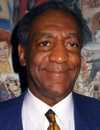
While Bill Cosby, who created The Cosby Show after success as a standup, has fallen from grace after his shocking past behavior came to light, his work as Cliff Huxtable remains iconic. Cliff became an iconic TV father who redefined what it meant to be a successful man of color on screen. A doctor who projected success without arrogance, Cliff was a loving husband and father as well.
Normalizing affection for his children and wife, Cliff’s ability to portray a real sense of fatherhood and love was important for future generations to see. Cliff’s role in reshaping the image of sitcom fatherhood remains influential to this day, despite Cosby’s shortcomings.

- Release Date
-
1984 – 1992
- Directors
-
Jay Sandrich, Chuck Vinson, Malcolm-Jamal Warner, Oz Scott, Alan Smithee
- Writers
-
Bill Cosby, John Markus, Gary Kott, Janet Leahy, Mark St. Germain, Ehrich Van Lowe, Adriana Trigiani, Ed. Weinberger, Lisa Albert, Michael J. Leeson, Oliver Hailey, Thad Mumford
-
Bill Cosby
Heathcliff Huxtable
-
Phylicia Rashad
Clair Huxtable
-

Malcolm-Jamal Warner
Theo Huxtable
-

Tempestt Bledsoe
Vanessa Huxtable
18
Alex P. Keaton
Family Ties

While Family Ties was originally meant to be about the Keaton family’s parents, staunch hippies, facing off against their more conservative children, things changed when audiences met Michael J. Fox’s Alex P. Keaton. Adding the P into Alex’s name himself, Fox was able to build a character that became so charming, audiences wanted more.
Alex’s political identity was sometimes difficult to swallow, but ultimately proved Fox’s ability to take the material he was given and elevate it. His sharp intelligence combined with the physicality and emotional resonance Fox brought into the role were iconic for viewers.

- Release Date
-
1982 – 1989-00-00
-

Meredith Baxter
Elyse Keaton
-
Michael Gross
Steven Keaton
17
Karen Walker
Will & Grace
-on-Will--Grace.JPG?q=49&fit=crop&w=500&dpr=2)
Best known for her squeaky voice and need for a martini, Karen Walker (Megan Mullally) was an iconic piece of the Will & Grace puzzle. Karen was a bold character who often felt more like a caricature than anything else, and sustaining that role was a feat for Mullally as she was given more and more to do on screen.
Karen was a loyal piece of the quad on Will & Grace, doing everything she could for her friends as she moved through her own tough relationships. Beneath her vanity and cruelty, Karen’s relationships with her friends were vulnerable and kind, anchoring her bitterness with a sense of truth.

- Release Date
-
1998 – 2006-00-00
- Showrunner
-
David Kohan
- Directors
-
James Burrows
- Writers
-
David Kohan

16
Fonzie
Happy Days

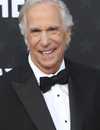
Arthur “Fonzie” Fonzarelli, played by the iconic Henry Winkler, became the breakout character of Happy Days throughout its run. Fonzie was known for his tough guy image, with the character nearly always wearing his leather jacket and riding his motorcycle. Though he was originally meant to be a side character, Fonzie quickly became the emotional anchor of the show.
Fonzie’s ability to evolve throughout the show’s run made him an iconic character overall. As the emotional center of the Happy Days universe, he was able to feel like a streetwise outsider and a part of the group all at once. Fonzie’s loyalty and sense of self built his character into an unforgettable touchstone.

- Release Date
-
1974 – 1984-00-00
- Directors
-
Jerry Paris, Frank Buxton, George Tyne, Herb Wallerstein, Mel Ferber, Art Fisher, Don Weis, Garry Marshall, Jerry London, Peter Baldwin
- Writers
-
David Ketchum, Mark Rothman, Lowell Ganz, Nancy Steen, Michael Weinberger, Neil Thompson, Jack Winter, David W. Duclon, Steve Granat, Barry O’Brien, April Kelly, Bob Brunner, Bruce Shelly, Charles Shyer, Craig Heller, Gary Murphy, Joel Kane, Lloyd Garver, Patt Shea, Rob Reiner, Ron Leavitt, Susan Harris, Harriett Weiss
-
Henry Winkler
Arthur Fonzarelli
-
Tom Bosley
Howard Cunningham


