Guillermo Del Toro’s Frankenstein is the perfect companion to Tim Burton’s most underrated film


Guillermo del Toro’s new film adaptation of “Frankenstein” takes a similar approach to the monster as Kenneth Branagh in his 1994 film “Mary Shelley’s Frankenstein.” In both films, Dr. Frankenstein (Oscar Isaac in del Toro’s film, Branagh in Branagh’s) is presented as an ambitious agent of chaos, a thoughtless character who does not consider the moral ramifications of reanimating a sewn-up corpse. Isaac’s Frankenstein, however, is presented as heartless and abusive, while Branagh is more oblivious. However, both are filmed with swirling camera movements and rapid editing. Frankenstein is a creature with dizzying movement.
The Monster, on the other hand, is a gentle creature, an inexperienced child. In the 1994 and 2025 films, the camera stops when looking at the monster. There is no music underneath. The monster walks in the woods, communes with animals and looks longingly (from afar) at the house of a happy and warm family living in the woods. Frankenstein is dizzying and violent. The Monster himself learns that there is gentleness in the world.
Del Toro, however, chose the tall and handsome Jacob Elordi as his monster. Despite his scarred face and stitched body, Del Toro’s Monster is a magazine-ready pretty boy. It’s not full of hidden rage, but college-level gothic angst that’s poetic and accessible. This monster has long, dark locks barely hiding his deep, soulful eyes. He quotes Percy Shelley and reads John Milton. He is, on the surface, a brooding stranger who longs for love; the type of monster that will inspire many young women to quietly whisper to themselves, “I can fix him.”
And when it comes to brooding, poetic…and dead…strangers who openly yearn for love, the Monster has a kindred spirit in Emily (Helena Bonham Carter), the main character of Tim Burton’s “Corpse Bride.”
Frankenstein is a spiritual cousin of Corpse Bride
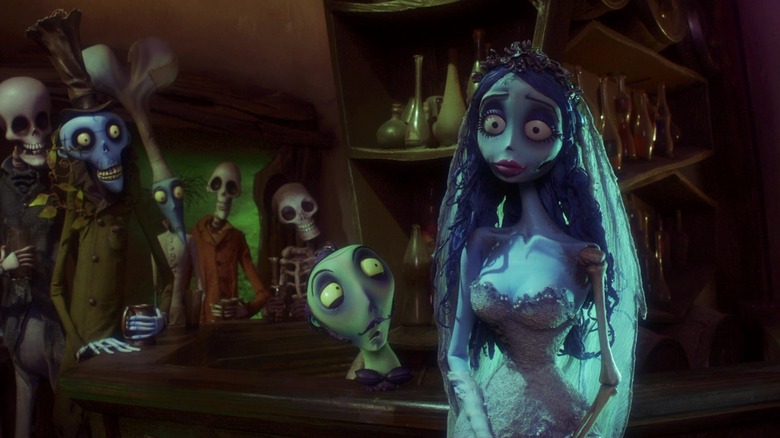
“Corpse Bride,” recall, was Burton’s 2005 stop-motion animated film starring Carter, Johnny Depp and Emily Watson. The story follows a shy young man named Victor, engaged to the equally shy Victoria, who only marries to merge their respective family fortunes. Victor and Victoria discover that they get along well, but Victor is too nervous to stage the elaborate wedding ceremony. Fleeing into the woods, Victor jokingly practices the ceremony by placing his wedding ring on a nearby tree branch.
The branch, however, is actually the half-buried skeletal hand of Emily, a woman who was killed in the woods several months before. The ring brings her back to life, and as it decays, she instantly falls in love with her new groom. She takes him away and they spend a long time in the afterlife, encountering happy corpses and smiling, singing skeletons. Victor may play nice, but he longs to escape his new corpse wife and return to the land of the living.
Emily, like many of Tim Burton’s protagonists (also think Edward Scissorhands or Jack Skellington) only needs love in her life. She is full of melancholy, but joy gently bursts within her when another human being looks at her with affection. Like Burton’s other protagonists, she is somewhat monstrous in appearance. Emily is dead, after all. She needs love, but she scares people. She will only be able to rest when her heart is full.
And Emily is full of light and poetry. She knows how to play the piano and loves dancing and music. At the end of the film, when Emily’s soul is finally freed, it explodes in a flutter of butterflies. She has beauty in her spirit. It’s a shame Emily never got to become Frankenstein’s bride.
My little Frankenstein has the sweetest smile
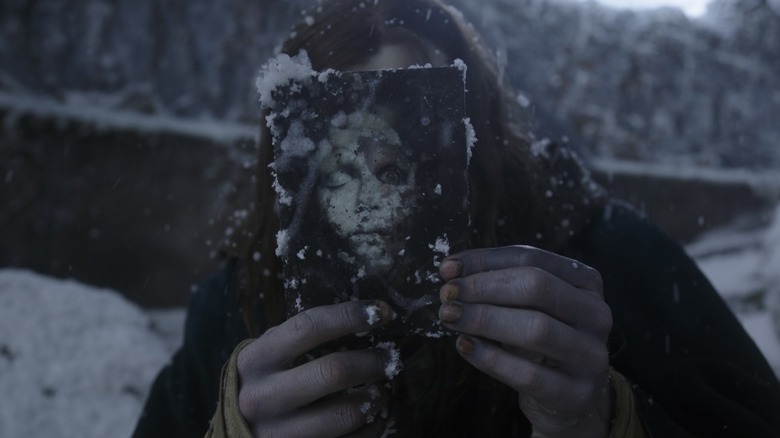
Del Toro’s Monster, by comparison, is a repulsive but loving character. He’s a perfectly pretty gothic sad boy. If he weren’t a bestial corpse living in the wild, this monster would be seen at Florence and the Machine concerts, drinking exotic coffees, and browsing Powell’s Bookstore in Portland. In 1818, the monster was created by Mary Shelley, but del Toro describes him as the kind of guy who would shout Percy Shelley quotes from your front lawn. How ironic that the monster knows “Ozymandias” and not the egocentric Victor Frankenstein. If it wasn’t clear that this monster wasn’t meant to be seen as a romantic victim, del Toro ends his film with an on-screen quote from Lord Byron.
Indeed, del Toro seems to be repeating Tim Burton’s trick. Burton is a master of underdogs, people who enjoy living outside the mainstream, but often yearn to enter it. Not because they need to be popular or accepted, but because they can find love and companionship there. Batman, Edward Scissorhands, Ed Wood, Jack Skellington, and, of course, Emily… they’re all senior members of Del Toro’s Monster family.
Del Toro’s film is far from perfect. The first half is sloppy and overstuffed, the monster action is silly, and Mia Goth’s character is extremely shallow and one-dimensional. But the gore is great and, more importantly, the monster is extremely appealing. He is your corpse. It’s the dead man’s heart that beats. Although capable of killing people by the dozens, this monster just wants to read books, pick flowers and have a companion, his own wife.
He and Tim Burton’s Emily would have gotten along great.


