Doctors helped me beat cancer, but they can’t stop me from having accidental menopause.


Angie BrownJournalist from Edinburgh and the East
 Kat Denisi
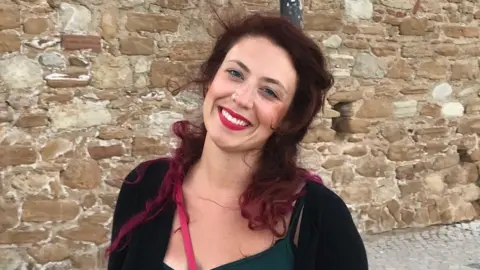
When Kat Denisi was diagnosed with breast cancer at age 32, she was put through a medically induced menopause to stop her hormones from fueling the tumor.
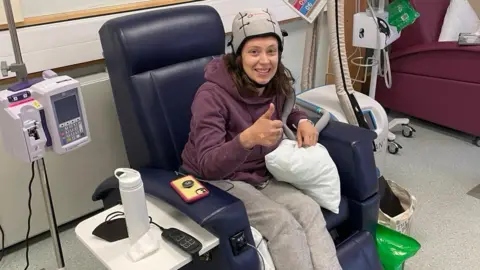
The set designer also underwent radiotherapy, which caused burns to her body, as well as chemotherapy, which caused her severe nausea.
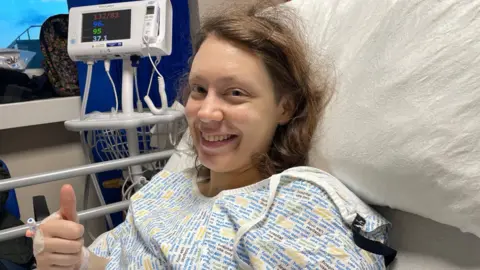
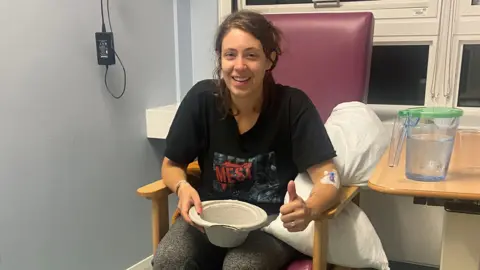
When her white blood cell count fell dangerously low, she had to spend time in the hospital, but she says doctors did everything they could to treat her symptoms.
Now 35 and cancer-free, Kat, who lives in Edinburgh, was hoping to feel much better.
But she didn’t know the ‘menopause crash’ would affect her so much.
“Sometimes menopause is worse,” she says.
“When you have symptoms of cancer, doctors throw the book at you to try to solve the problem.
“They take very good care of you during chemo and after your surgeries and thanks to the radiation you get constant check-ups.
“But once all that is over, that’s when they push you off the cliff.
“They tell me, ‘OK, goodbye.’ No one has talked to me about menopause at all and you don’t know what happens to your body,” she said.

 Kat Denisi
Every woman goes through menopause, the process of her monthly periods stopping due to a decrease in hormone levels.
The majority experience the transition between the ages of 45 and 55, with the average age being 51.
Symptoms can vary widely and affect almost every aspect of physical and mental well-being, from common ones like hot flashes and mood swings to lesser-known ones like joint pain, bloating, and brain fog.
While natural menopause causes a gradual decline in hormones, medically induced menopause can occur overnight.
The symptoms appear so suddenly and are so intense that they are sometimes called “accidental menopause.”
Kat, who has now been undergoing menopause-inducing injections for four years, has since suffered a loss of libido, anxiety and severe hot flashes.
“I’ve had a lot of problems with a dry vagina and bleeding fissures and it’s really painful,” she said.
“It’s so terrible, the hot flashes you can feel bubbling throughout your body and then spreading all over your face and then your cheeks turn into bright red apples that burn and then I feel like I’m going to throw up.”
 Kat Denisi
“It really sucks because I got married and you’re supposed to be having the best years of your life,” Kat said.
Instead, she feels sick all the time.
“When you go through chemotherapy, there are so many side effects that I don’t think you really notice menopause until you come out the other side,” she said.
Hormone replacement therapy (HRT) is one way to manage menopausal symptoms, but Kat cannot choose this option because estrogen, a key component of many HRT products, can stimulate the growth of breast cancer cells.
“The crippling thing about menopause is that doctors don’t have a lot of solutions,” she said.
 Kat Denisi
Kat said: “The day I had my first injection my ovaries shut down immediately. It’s not a slow meander into sudden menopause, it’s literally the next day, whereas normal menopause is very prolonged.
She said she was put into abrupt menopause to protect her ovaries from chemotherapy, which could have destroyed all her eggs.
Medically induced menopause can be temporary or permanent, depending on treatment and individual factors such as age.
“The longer you are in medically induced menopause, the less likely you are to get your period,” Kat said.
When she stops taking her menopause medication in a year, she will know within six months if her periods will return.
“It would be really upsetting if it was permanent, but I’m hopeful because my body is strong and capable of healing itself.
“If I stay menopausal, I suspect I will have the symptoms forever because I entered menopause so young my body will be confused.”
If her periods return, she will have to experience a second natural menopause in the future.
“It’s really unfair to miss out on some of the best years of your life due to sudden menopause and then have to relive it all again. The hot flashes, the memory loss, the brain fog and the joint pain.
“It’s quite upsetting to think that I might have to start all over again.”
 Kat Denisi
Dame Laura Lee, chief executive of cancer charity Maggie’s, said accidental menopause could be “brutal” for many women with cancer, “but awareness is woefully low”.
“Menopause used to be a taboo subject that no one talked about, but now we have many celebrities shining a light on the subject – we need to do the same for ‘accidental menopause’ – we want to let people know that we are here with them during cancer treatment and all that it entails, including accidental menopause,” she added.
“If we keep the conversation going, more women, their friends and family will be able to identify the signs and symptoms and get the help they need. Whether that’s psychological support or help understanding what this might mean for their fertility, or to protect their long-term health.”
Kat says she thinks young people who have been subjected to medically induced menopause suffer in silence.
“People expect you to get back to normal after cancer treatment and ask, ‘Are you okay now, is everything okay now?’” she said.
“And you’re like, ‘Oh yeah, I’m cured and back to normal,’ but inside you’re screaming into the void because you’re not back to normal.”
 Kat Denisi
“It’s crazy how many people don’t know that many young women who have had cancer are subject to this induced menopause,” she added.
“I just want to shout from the rooftops what it is because if your family doesn’t know, they can’t help you.
“Now my husband knows and his parents know so they can help me be the best version of myself instead of saying, ‘You’re okay, everything’s okay, right?’


