John Robertson: Former Nottingham Forest and Scotland winger dies aged 72 | Football news


Former Nottingham Forest and Scotland winger John Robertson has died aged 72.
Robertson, who started and finished his career at the City Ground, alongside local rivals Derby, became a cult hero at Forest after playing a vital role in the club’s European Cup victories in 1979 and 1980.
Robertson provided the cross for Trevor Francis to head in the only goal against Swedish side Malmö in Munich as Brian Clough’s side lifted the European Cup for the first time.
Twelve months later, Robertson was on the scoresheet in another 1-0 victory as Forest successfully defended their European crown against Hamburg at the Bernabeu in Madrid.
He won 28 caps for Scotland during his five-year international career, including being selected at the 1978 and 1982 World Cups.
A statement from Forest read: “We are heartbroken to announce the passing of Nottingham Forest legend and dear friend, John Robertson.
“A true great of our club and two-time European Cup winner, John’s unrivaled talent, humility and unwavering dedication to Nottingham Forest will never be forgotten.
“Our thoughts are with John’s family, his friends and all those who loved him.
“Rest in peace, Robbo…Our best.”
Lanarkshire-born Robertson signed for Forest at the age of 15, soon making his debut aged just 17, and would become a key player as Clough’s side won the First Division title in 1978 before securing back-to-back European Cup triumphs.
Robertson also won the League Cup twice with Forest, before joining Derby in 1983.
After two years at Derby, Robertson returned to the City Ground in 1985, playing 12 times in his final season before being released.
Following his retirement, Robertson then moved into coaching as assistant to former Forest teammate Martin O’Neill at Celtic and Aston Villa.
Robertson: The ‘tramp’ who helped Forest win two European Cups
John Neilson Robertson was born on January 20, 1953 and grew up in Uddingston, a town in Lanarkshire just outside Glasgow, living in the same area of Viewpark as another great Scottish winger, Jimmy Johnstone.
The youngest of three children, his father, Hughie, was a former miner who worked at the Electricity Commission, and his mother worked at the local Tunnock biscuit factory.
Robertson represented Scotland Schoolboys and signed for Forest at the age of 15 before making his debut at 17.
Forest were relegated from the top flight in 1972 and, although Robertson benefited from a spell under Dave Mackay, he fell out of favor with Clough’s predecessor Allan Brown, who unsuccessfully tried to swap him for Partick Thistle’s Ronnie Glavin.
Despite this, Robertson was bizarrely and mistakenly called out by New England boss Don Revie when he was naming 90 players for a meeting in 1974.
Clough jokingly referred to Robertson as a “bum” because of his looks, but the winger craved any gesture of approval he received from his boss, saying in his 2012 autobiography, Super Tramp: “When I was on the receiving end, I could have done a cartwheel. The day I stopped playing for the gaffer, it seemed like there was a huge void in my life.”
Robertson won the title, two League Cups and two European Cups – allowing Trevor Francis to score the only goal against Malmö in the 1979 final after overcoming the death of his brother Hughie in a road accident days before the semi-final, an incident which precipitated his heavy smoking. He won against Hamburg in the 1980 final.
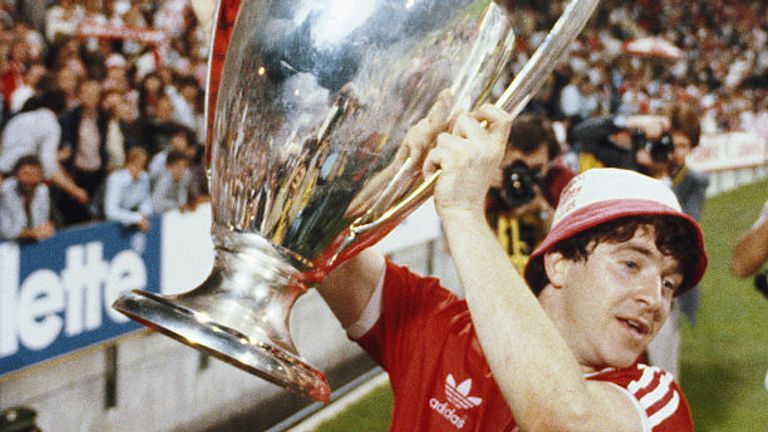
Robertson won the European Cup twice at Forest
His form with Forest saw him included in Scotland’s 1978 World Cup squad before he had even made his international debut.
Robertson scored eight times in 28 appearances, netting against New Zealand in the 1982 World Cup and scoring a winner at Wembley in 1981 – after which he was flown to London on the England team bus after hosting a party at Stringfellows with Forest and England striker Tony Woodcock.
The day he stopped playing for Clough came in 1983 when, with contract negotiations with Forest slow to get going, he shocked his mentor by signing for Taylor at Derby. The deal spelled the end of the already frosty relationship between Taylor and Clough and Robertson was initially told he was not welcome at the City Ground.
This decision turned out to be a disaster.
Robertson’s mind was not fully occupied after his first child, Jessica, was born severely disabled in pre-season. With Forest back in Europe, Derby were in difficulty and relegated from the Second Division at the end of the season.
Clough forgave Robertson and re-signed him in 1985, with the Scot playing 12 times in his final season before being released.
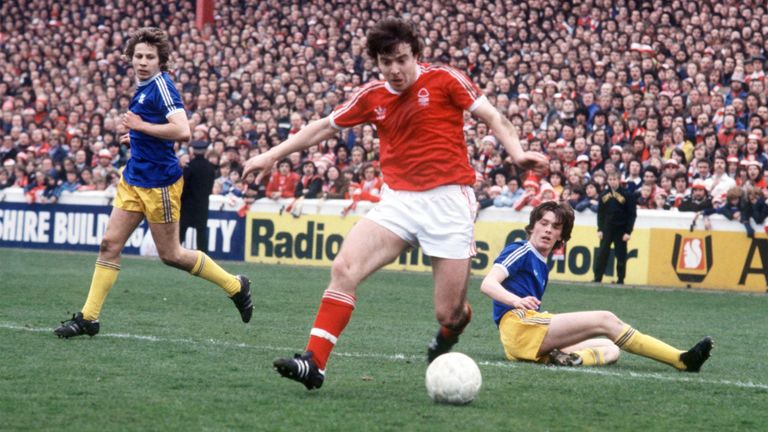
Robertson won the 1977/78 First Division title at Forest
At 33, he was surprised to find no offers from league clubs and had an unhappy period running a pub.
Life after football proved difficult at first, with Robertson and his first wife, Sally, embroiled in a lengthy legal battle with the NHS over the treatment of their daughter at birth.
Jessica, who had cerebral palsy, couldn’t communicate and died aged 13, but Robertson admitted she made him more caring and considerate.
Robertson separated from his wife and spent time sleeping on friends’ sofas, but his friendship with his former Forest teammate Martin O’Neill helped him enormously.
Robertson played for O’Neill at non-league Grantham, got a job under him in insurance sales, then, after a spell as manager of Grantham himself, was a scout for him at Wycombe, Norwich and Leicester.
By the time both men left for Celtic in 2000, Robertson was O’Neill’s right-hand man and he bought a house in Uddingston.
“He was a special (coaching) partner, there’s no doubt about that,” O’Neill recalled in 2024 when Robertson featured in BBC Scotland Football series icons.
“People, for lack of a better phrase, believed John, they really did. There was something about him.”
Robertson’s last job in football was as assistant manager of Aston Villa from 2006 to 2010.
In August 2013, Robertson was taken to hospital after suffering a heart attack while playing tennis with his former Forest teammate Liam O’Kane and had a stent inserted.
Robertson is survived by his daughter Elisabeth and his second wife Sharyl, as well as their children, Andrew and Mark.


