
Marc PoyntingClimate journalist
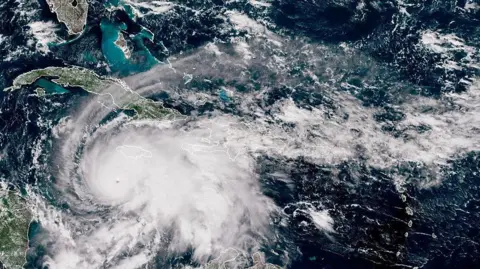 NOAA via Getty
Hurricane Melissa, one of the strongest Atlantic storms on record, created “extremely dangerous and life-threatening” conditions in Jamaica, according to the US National Hurricane Center.
Climate change is not expected to increase the number of hurricanes, typhoons and cyclones worldwide.
But warmer oceans, combined with a warmer atmosphere – fueled by climate change – have the potential to make those that form even more intense.
This can potentially lead to higher wind speeds, heavier rainfall and a higher risk of coastal flooding.
What are hurricanes and where do they occur?
Hurricanes are powerful storms that develop in the warm waters of tropical oceans.
In other parts of the world, they are called cyclones or typhoons. Collectively, these storms are called “tropical cyclones.”

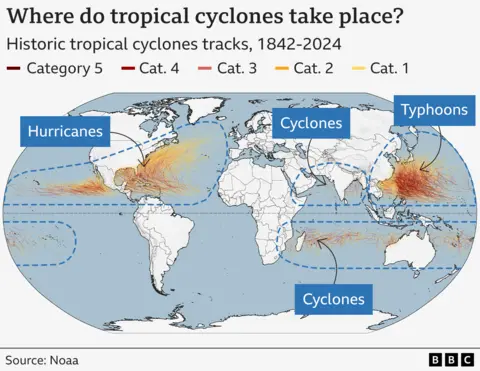
Tropical cyclones are characterized by very high wind speeds, heavy precipitation, and storm surges – a short-term rise in sea level. This often causes considerable damage and flooding.
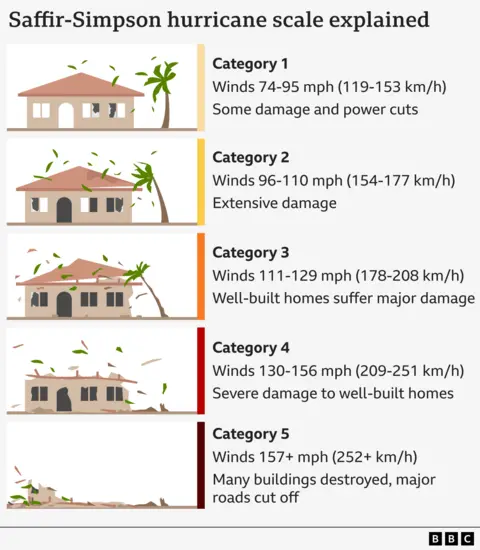
Hurricanes can be classified according to their maximum sustained wind speed.
Major hurricanes are classified as category three and above, meaning they reach at least 111 mph (178 km/h).
How are hurricanes formed?
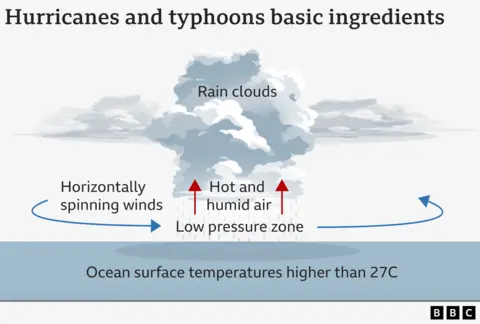
Hurricanes, typhoons and cyclones begin with atmospheric disturbances, such as a tropical wave, an area of low pressure where thunderstorms and clouds develop.
As warm, moist air rises from the ocean surface, the winds begin to shift. This process is related to how the Earth’s rotation affects winds in tropical regions just away from the equator.
For a hurricane to develop and continue to rotate, the sea surface temperature must generally be at least 27°C to provide sufficient energy, and winds must not vary much with height.
If all of these factors come together, an intense hurricane can form, although the exact causes of each storm are complex.
Have hurricanes gotten worse?
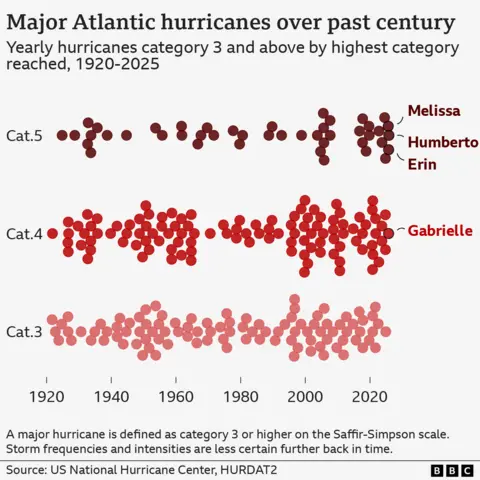
Globally, the frequency of tropical cyclones has not increased over the past century and, in fact, their numbers may have declined – although long-term data is limited in some regions.
But it is “likely” that a higher proportion of tropical cyclones across the world have reached category three or above over the past four decades, meaning they reach the highest wind speeds, according to the UN climate body the IPCC.
How does climate change affect hurricanes?
Assessing the precise influence of climate change on individual tropical cyclones can be difficult due to the complexity of these storm systems.
But rising temperatures can affect these storms in several ways.
First, warmer ocean waters mean storms can capture more energy, leading to higher wind speeds.
Maximum hurricane wind speeds between 2019 and 2023 have been increased by about 30 km/h on average due to human-caused ocean warming, according to a recent study.
Second, a warmer atmosphere can hold more moisture, leading to more intense precipitation.
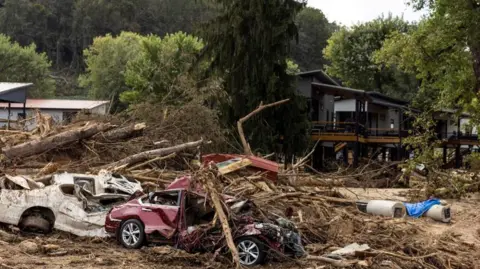
Climate change has made extreme rainfall caused by Hurricane Harvey in 2017 about three times more likely, according to one estimate.
 Reuters
Finally, sea levels are rising, mainly due to melting glaciers and ice caps, as well as warmer waters taking up more space. Local factors may also play a role. This means storm surges occur above already high sea levels, worsening coastal flooding.
For example, flood heights from Hurricane Katrina in 2005 – one of America’s deadliest storms – are estimated to have been 15 to 60 percent higher than they would have been under 1900 climate conditions.
Overall, the IPCC concludes that there is a “high confidence” that humans have contributed to the increased precipitation associated with tropical cyclones, and a “medium confidence” that humans have contributed to the higher likelihood that a tropical cyclone will be more intense.
How might hurricanes evolve in the future?
The number of tropical cyclones is unlikely to increase worldwide, according to the IPCC.
But as the planet warms, it is “very likely” that precipitation rates and maximum wind speeds will be higher. This means that a higher proportion would reach the most intense categories, four and five.
The more global temperatures rise, the more extreme these changes will tend to be.
The proportion of tropical cyclones reaching categories four and five could increase by around 10% if the global temperature increase is limited to 1.5°C, rising to 13% at 2°C and 20% at 4°C, according to the IPCC – although the exact figures are uncertain.


