
No matter how you look at it, the “Star Wars” franchise has changed dramatically over the past 10 years, going from a series primarily based on cinematic events to a primarily streaming-only television venture. As Disney and Lucasfilm bring “Star Wars” back to theaters with the upcoming “Starfighter” and “The Mandalorian and Grogu,” the former still remains an unknown, while the latter feels less like an event and more like a big-screen version of a small-screen show. Unfortunately, that’s pretty much what we have to work with, given that the franchise has gone through an incredibly high number of false starts and near misses to get to these two future features.
One of these near misses was just revealed thanks to Adam Driver’s interview with AP News, and it’s a real hoot. According to the actor, who played Kylo Ren née Ben Solo in the Sequel Trilogy, he and Lucasfilm were working on a solo film called “The Hunt for Ben Solo,” and the director they selected was none other than Academy Award winner Steven Soderbergh. Rather than just a pitch or the kernel of an idea, it appears that Soderbergh and Driver not only had a finished script in hand, but also the approval of Lucasfilm executives, including Kathleen Kennedy. However, when presenting the project to Disney CEO Bob Iger and co-chairman Alan Bergman, the executives rejected the idea outright for the sole reason that they “didn’t see how Ben Solo was alive,” as Driver explained. It’s, to say the least, a strangely pedantic reason to cancel what probably would have been a fascinating, maybe even great, new “Star Wars” movie, and it’s a pretty good indication of why the franchise, such as it is, seems so creatively stagnant.
Driver and Soderbergh’s Ben Solo Movie Had an Exciting Team Attached
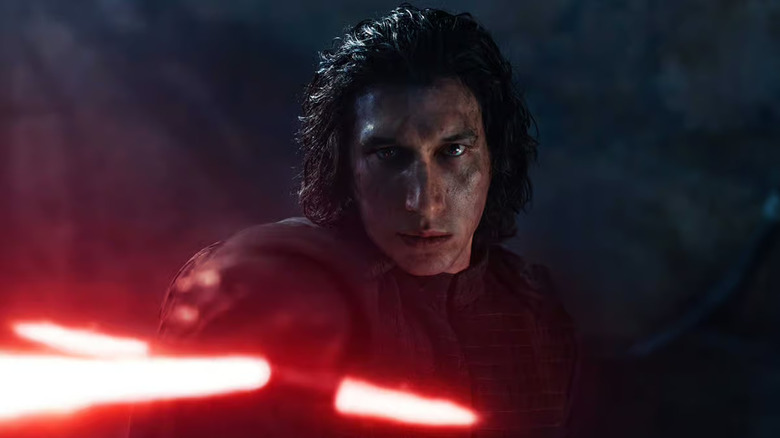
It’s easy to understand the sense of apathy many people feel toward franchises these days, as it seems like most new installments exist more for guaranteed paydays than any creative passion. However, this was not the case with Driver:
“I’ve always wanted to do another ‘Star Wars.’ I’ve been talking about doing another one since 2021. […] I always said: with a great director and a great story, I’ll be there in a second. I loved this character and I loved playing him.”
According to Driver, he took the film’s concept to Soderbergh (with whom he worked on “Logan Lucky”), who then sketched out a story with Rebecca Blunt (a pseudonym that likely belongs to Soderbergh’s wife, Jules Asner) before handing screenplay duties to collaborator Scott Z. Burns. The result was invigorating, as Driver recalls:
“[It was] one of the coolest (expletive) scripts I’ve ever been a part of. We presented the script to Lucasfilm. They loved the idea. They completely understood our angle and why we were doing it. We pitched it to Bob Iger and Alan Bergman and they said no. […] And that was it.”
In a statement given to AP News, Soderbergh echoed Driver’s sentiments with a strong dose of regret:
“I really enjoyed making the movie in my head. I’m just sorry the fans won’t be able to see it.”
It’s a shame the movie didn’t happen, especially when Soderbergh has been on a hot streak lately, as his films “Kimi,” “Presence” and “Black Bag” have been praised for being exceptionally intelligent genre films. If the director had let his hair down on “Star Wars,” we might have had the first truly daring entry in the series since “The Last Jedi.”
The Ben Solo movie death is another example of the problems with kowtowing to horrible fans.
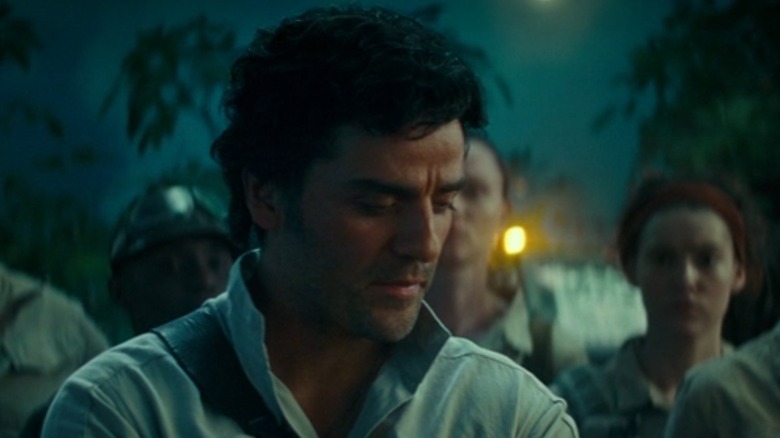
Separate from the knowledge of the last few years of “Star Wars” discourse, there are countless instances of supposedly dead characters coming back to life within “Star Wars” itself (Ben Kenobi’s Force Ghost, for example). Unfortunately, one of the most controversial examples is the return of Emperor Palpatine in “The Rise of Skywalker.” Criticisms of Palpatine’s Return have mostly revolved around how heavy-handed the concept is in trying to tie all three “Star Wars” trilogies together in a single concluding chapter. Yet thanks to the way the discourse works on social media – that is, it is reduced to a single meme – one could interpret that most fans’ problem with the character’s resurrection is that he was resurrected.
In other words, it’s entirely likely that Iger and Bergman were worried that another “Somehow Palpatine came back” meme would catch fire if they brought back the seemingly dead Ben Solo for a post-“Rise of Skywalker” movie. If so, this is yet another example of the “Star Wars” franchise meekly responding to the complaints of the loudest and most obnoxious fans, as seen in the case of “The Acolyte” and even “The Rise of Skywalker” itself. This, coupled with the long list of canceled projects with major filmmakers, has turned “Star Wars” into a depressing, risk-averse universe, with projects like “Andor” becoming the exception and not the norm. This is ironic, considering that George Lucas’ original 1977 film represented one of the biggest risks in cinematic history. While it’s understandable that business owners might not want to shake things up, those in charge of the galaxy far, far away would do well to worry less about pleasing certain people all the time.


