
Michael Rooker has been a steady pair of hands in Hollywood supporting roles for nearly four decades, proving equally adept at playing trustworthy sidekicks and sneering villains. To younger movie fans, he’s probably best known as Yondu, Peter Quill’s blue-skinned space pirate surrogate father in the “Guardians of the Galaxy” films. That character ultimately leaned toward the more endearing side of his filmography, but this leading role in a blockbuster trilogy that grossed nearly $2.5 billion at the box office was light years away from how viewers first saw him in his shocking psychological breakout role that inspired the MPAA’s NC-17 rating.
Rooker was performing in theater and working as a janitor when director John McNaughton told him about his first film project, “Henry: Portrait of a Serial Killer,” based on the true crimes of Henry Lee Lucas. Apparently, Rooker showed up to the reading in his janitor uniform, and the film was so low-budget that he wore his own clothes once on set. Rooker fully committed to the role, speaking to the Texas Rangers who had interviewed the real Henry and remaining in character throughout the 28 days of filming. He was so in the zone that his wife held back from revealing that they had a baby on the way until the end of the film.
Rooker’s performance method and McNaughton’s documentary approach to the subject certainly added to the raw realism. Due to lack of funds, the director filmed on the fly without a permit and used family and friends in supporting roles. This lo-fi nature of “Henry” gives it an unsettling naturalistic vibe. Indeed, it is the general atmosphere rather than its violent content that earned the film the famous “X” certificate from the MPAA. Clearly something had to change.
What happens in Henry: Portrait of a Serial Killer?
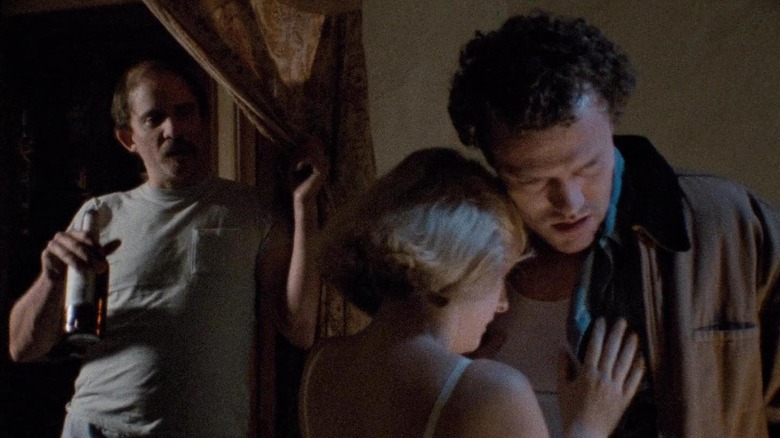
As the title suggests, Henry (Michael Rooker) is a serial killer who drifts west across the United States, selecting his victims at random and changing his method to keep the cops away. When we meet him, he’s working casual jobs and living in a dingy apartment with Otis (Tom Towles), an ex-convict he met while they were in prison together. The dynamic changes with the arrival of Becky (Tracy Arnold), Otis’ downtrodden sister who was sexually abused by her father when she was a teenager.
Becky loves Henry and he protects her by fending off an incestuous advance from Otis, which almost ends in a fight. The guys make peace by going out to pick up some sex workers, whom Henry kills in front of his roommate. Otis enjoys it and joins Henry in an increasingly depraved and reckless killing spree. Meanwhile, Becky’s romantic feelings toward Henry grow stronger, and it’s only a matter of time before the tension between the trio boils over into horrific violence.
“Henry: Portrait of a Serial Killer” is a heartbreaking, unflinching chamber piece that brings us suffocatingly close to three deeply wounded people living joyless existences surrounded by moral and economic decay. They are products of their environment, and there is no grand plan or ingenious message behind Henry’s murders. He just has a complete lack of empathy and an urge to kill that serves no purpose other than to fill the void within him for a brief moment. This desire is insatiable and there is a dark inevitability to the film’s brutal conclusion, which casts us to the side of the road with a blood-stained suitcase and the horror of emptiness swirling in our minds.
Henry’s X-rated certification issues contributed to his NC-17 rating
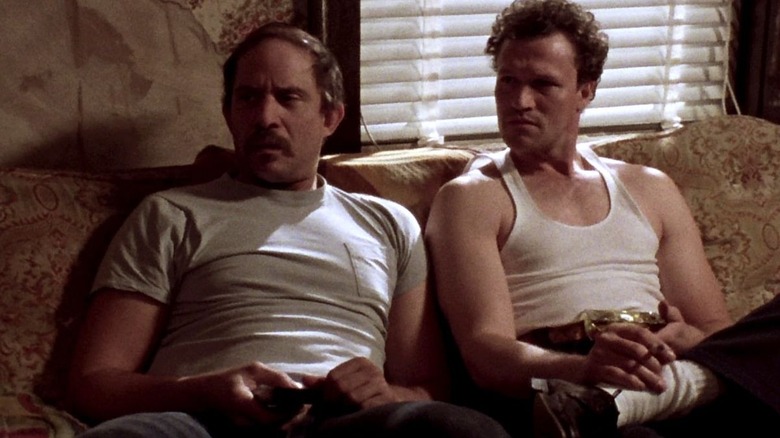
“Henry: Portrait of a Serial Killer” premiered at the Chicago International Film Festival in 1986, but the commercial prospects of John McNaughton’s film were seriously hampered when the MPAA gave it an X attached. Additionally, the MPAA indicated that there was no way to cut material to achieve a less severe R rating.
The violence in “Henry” is disturbing but certainly no more graphic than that offered for fun in slasher films of the era, and Roger Ebert argued for the film on that basis. He argued that a sincere work of art that took violence seriously did not deserve to be exiled from cinemas, when other horror films routinely trivialized it. Ebert and fellow critic Gene Siskel advocated for an A certificate, indicating that a film was strictly for adults without the pornographic stigma of the It was a minor triumph for McNaughton, who admitted he would have removed the offending material if the censors had asked.
It also benefited mature viewers, who could handle uncompromising films like “Henry.” It’s certainly not a fun watch, and it’s particularly difficult in retrospect: serial killer movies and macabre crime shows have become disposable popcorn entertainment. The film is admirable for its complete refusal to allow the audience any sort of vicarious thrill due to the actions of Henry and Otis; it’s brutal, ugly, and nihilistic, which also makes it one of the best films about real serial killers ever made.


